
How Sustainable Is a Galapagos Cruise? The Environmental Impact
Quick Summary
A Galapagos cruise is more environmentally regulated than almost any other tourism experience on earth, but it is not impact-free. The GNPD enforces strict visitor rules at every site: marked trails only, 2-meter minimum distance from wildlife, no flash photography, reef-safe sunscreen only, no single-use plastics, and group size capped at 16. The $200 park fee funds conservation directly. The honest environmental tension is the long-haul flight to Ecuador, which generates the largest single carbon cost of the trip. Within the archipelago, the cruise format is meaningfully better for the ecosystem than independent land-based travel, because vessel waste management, biosecurity inspections, and naturalist supervision reduce invasive species risk and direct human impact. Among operators, Ecoventura has the longest and most documented sustainability record: first Smart Voyager certification in 2000, carbon neutral since 2006, 50-plus percent locally sourced food, reforestation on Santa Cruz. Celebrity Flora leads the fleet on marine sustainability practices and single-use plastic elimination.
GNPD Environmental Rules Every Galapagos Cruise Visitor Must Follow
| Rule | Why It Exists |
|---|---|
| Stay on marked trails only | Prevents trampling of nesting sites and endemic vegetation. Trails are placed to maximize wildlife access while minimizing ecological disruption. |
| Maintain 2 meters (6 feet) from all wildlife | Protects animals from stress and behavioral disruption. The rule applies even when wildlife approaches you; back away rather than allowing contact. |
| No flash photography at any visitor site | Flash disturbs nesting seabirds and has been shown to increase stress hormones in marine iguanas. Enforced at all GNPD sites by naturalist guides. |
| Reef-safe sunscreen only (zinc oxide or titanium dioxide) | Chemical sunscreens (oxybenzone, octinoxate) bleach coral and harm marine invertebrates. GNPD banned harmful sunscreen ingredients fleet-wide. Introduced March 2024. |
| No single-use plastics | The archipelago banned single-use plastic bags in 2015 and polystyrene in 2018. Vessels must comply. Most quality vessels provide reusable metal water bottles. |
| Maximum 16 visitors per group at each site | Limits acoustic and physical disturbance at visitor sites. Luxury and first-class vessels typically operate at 8 to 12 per group, below the maximum. |
| No food, plants, or animals introduced to the islands | Invasive species are the single greatest threat to Galapagos biodiversity. Strict biosecurity inspections at Ecuadorian airports check all luggage before the domestic flight. |
| Park hours strictly 6 a.m. to 6 p.m. | Protects nocturnal and crepuscular species. No visitor site access after 6 p.m.; only permitted night diving under specific GNPD authorization is excepted. |
Rules enforced by GNPD-certified naturalist guides on every cruise. Violations can result in removal from visitor sites. Verified September 2026.
Is a Galapagos Cruise Environmentally Responsible?
A Galapagos cruise is one of the most regulated tourism experiences on earth, operating within a national park framework that is more restrictive than almost any other wildlife destination. Within the archipelago, the cruise format is broadly considered more environmentally responsible than land-based independent tourism. The honest environmental cost of the trip is the long-haul flight to Ecuador, which generates the largest single carbon footprint of the entire journey. Within those boundaries, the specific operator and vessel you choose affects your environmental impact meaningfully.
The governance framework of the Galapagos National Park is the starting point for any honest environmental assessment. The archipelago is a UNESCO World Heritage Site and Biosphere Reserve, and 97 percent of its land area is protected national park. Every vessel operating cruise itineraries must hold a current GNPD permit, carry a licensed naturalist guide for every excursion, follow approved itineraries, comply with the visitor rules at every site, and pass biosecurity inspections. No other wildlife destination in the world applies this level of systematic visitor management. The result is an ecosystem that, despite receiving over 340,000 visitors per year, has maintained most of its endemic species populations and continues to improve on key conservation metrics.
The flight to Ecuador is the environmental reality that responsible travel writing cannot sidestep. A return flight from London to Quito generates approximately 2.5 to 3 tonnes of CO2 per passenger. From New York, it is approximately 0.9 to 1.2 tonnes. These are real emissions with real climate consequences. The honest argument for making the trip is not that the flight is environmentally neutral but that the $200 park fee, the economic activity generated for local Galapagueño communities, and the direct conservation funding through park management go to protect an ecosystem whose ecological value is many orders of magnitude larger than the emissions cost. This is a judgment call each traveler makes. The information to make it should be honest.
Choosing an operator with documented sustainability credentials is the single most effective environmental action a Galapagos traveler can take beyond compliance with GNPD rules. We only recommend operators who meet a sustainability threshold. Fill out this short form and we will include sustainability credentials alongside the other vessel comparison information we provide.
What Are the Environmental Rules Every Galapagos Cruise Must Follow?
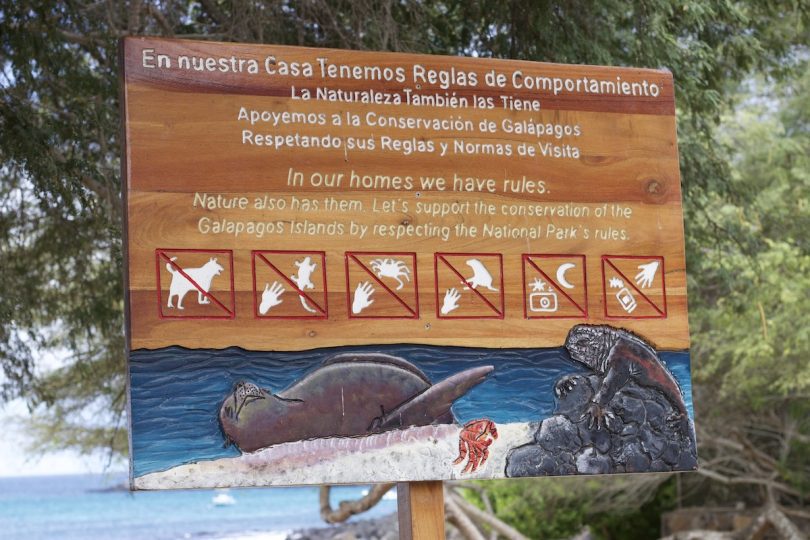
The GNPD enforces 14 visitor rules at all sites, applicable to every cruise traveler regardless of vessel class or operator. The most environmentally significant are the trail restriction (visitor sites have demarcated paths; no off-trail movement is permitted), the wildlife distance rule (2 meters minimum, even when animals approach), the flash photography prohibition, the reef-safe sunscreen requirement (zinc oxide or titanium dioxide only, effective March 2024), the single-use plastics ban (archipelago-wide since 2015 for bags, 2018 for polystyrene), and the group size cap of 16 visitors per naturalist guide.
The sunscreen rule deserves specific attention because it was formalized into GNPD regulations in March 2024 and is not universally known among travelers who researched the destination before that date. Chemical sunscreens containing oxybenzone and octinoxate have been demonstrated to bleach coral, inhibit coral larval development, and harm marine invertebrates including the sea cucumbers that play a critical role in reef health. Zinc oxide and titanium dioxide mineral sunscreens provide equivalent UV protection without these effects. Most quality vessels now provide reef-safe sunscreen for passengers who arrive without it; budget vessels may not. Bring your own to remove the uncertainty.
The biosecurity inspection at Ecuadorian airports (Quito and Guayaquil) before the domestic Galapagos flight is one of the most underappreciated environmental protection mechanisms in the cruise experience. Trained officials check all luggage for food, soil, plant material, and live organisms that could introduce invasive species to the archipelago. Invasive species, not tourist traffic, are the primary ongoing threat to Galapagos biodiversity. Rats, goats, cats, and invasive plants have caused local extinctions on several islands; the biosecurity checkpoint is the ecological front line. Compliance is not optional and inspection is thorough. Declare anything questionable; the inspection officers are more interested in preventing introduction than in penalizing travelers who disclose.
Want to know the park rules before your naturalist guide has to correct you in front of the group? Our guide on Galapagos National Park rules for cruise visitors covers everything worth knowing before your first landing.
How Does Cruise Tourism Affect the Galapagos Ecosystem?
Cruise tourism’s environmental impact on the Galapagos is genuinely lower than equivalent visitor numbers in land-based tourism, primarily because the cruise format keeps visitors supervised, on defined trails, at managed sites, for managed durations, with waste contained and managed on the vessel. The environmental pressure points are vessel fuel consumption (diesel engines on most of the fleet), anchor damage at some sites, the cumulative acoustic disturbance from vessel traffic in the marine reserve, and the baseline risk of invasive species introduction that biosecurity protocols minimize but cannot eliminate entirely.
The comparison between cruise and land-based tourism is relevant because it is not obvious which is more environmentally impactful at first consideration. A cruise ship burning diesel for 8 days sounds more polluting than a traveler staying in a hotel in Puerto Ayora. But the cruise traveler’s wildlife encounters are supervised and controlled; the land-based traveler in Puerto Ayora independently navigating to visitor sites, taking water taxis to multiple islands, and having less structured interaction with the ecosystem is harder to manage at scale. The Charles Darwin Foundation’s tourism management report from 2025 identifies land-based visitors as a growing management challenge relative to cruise visitors precisely because their behavior is less predictable and their biosecurity compliance is harder to enforce.
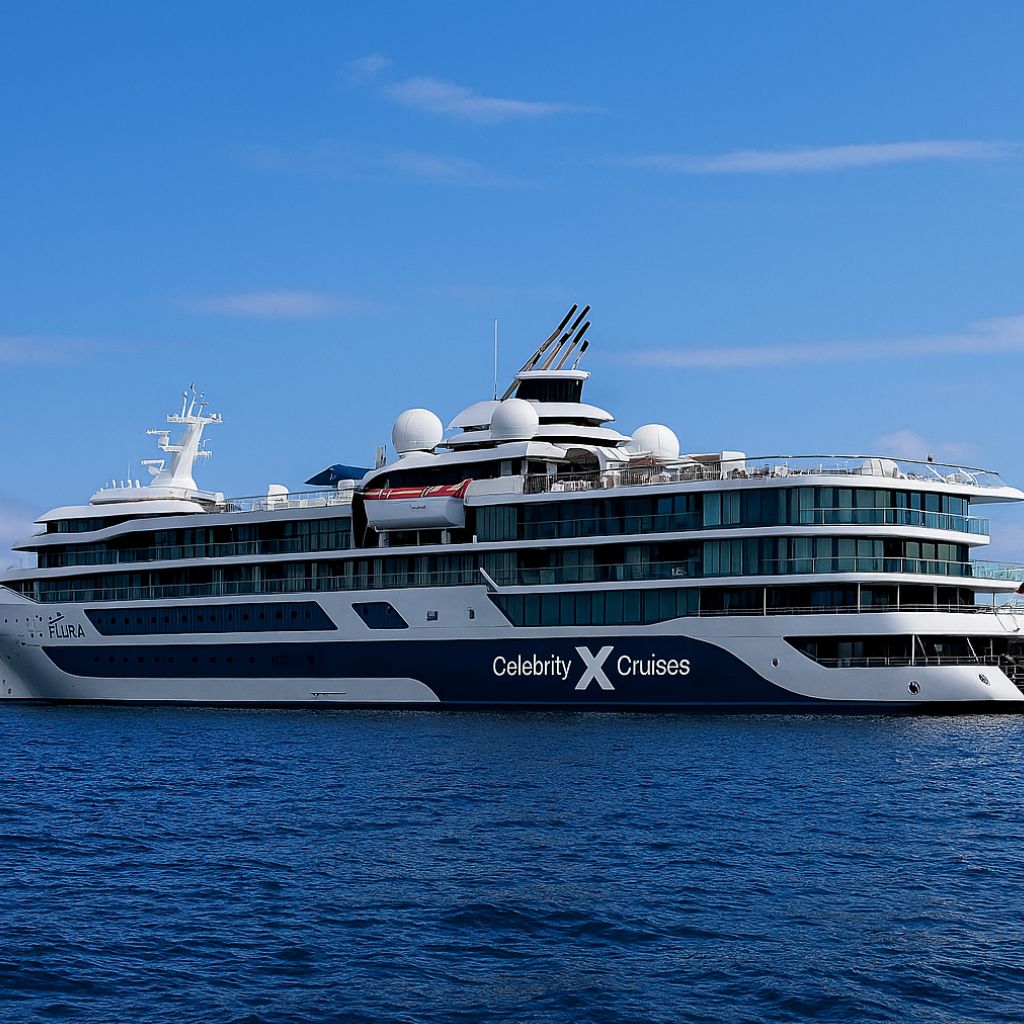
Fuel consumption is the most significant ongoing environmental cost of cruise operations within the archipelago. Most of the Galapagos fleet runs on diesel. Ecoventura’s original Eric vessel was the first to install solar panels and wind generators, a hybrid configuration that reduced but did not eliminate fuel dependence. The transition to lower-emission propulsion across the broader fleet is gradual and expensive. Electric or hybrid vessels suitable for the overnight passages required by 7 to 8-day Galapagos itineraries do not yet exist at the scale needed. The fleet improvement trajectory is positive; the current baseline is still primarily diesel-powered.
The specific sustainability practices of any vessel we recommend are part of the information we provide alongside the cruise quote. We do not recommend operators with documented environmental compliance failures. Reach out here and ask specifically about sustainability credentials when you request a quote and we will address them directly.
Which Galapagos Cruise Operators Have the Strongest Sustainability Credentials?
Ecoventura has the most documented and longest sustainability record in the Galapagos fleet. They received the first Smart Voyager ecological certification (developed by the Rainforest Alliance) in 2000, became the first carbon-neutral operation in the Galapagos in 2006 through verified carbon offsets, source more than 50 percent of their food locally from Galapagos producers, have planted over 1,100 native trees on Santa Cruz in a highland reforestation initiative, eliminated single-use plastic water bottles fleet-wide by 2018, and partnered with WWF to create the Galapagos Marine Biodiversity Fund which raised over $400,000. Celebrity Flora leads the fleet on single-use plastic elimination and has a documented Scalecia tree reforestation program.
The Smart Voyager certification is the most rigorous third-party sustainability standard specific to the Galapagos fleet, developed by the Rainforest Alliance and the Ecuadorian organization Corporacion de Conservacion y Desarrollo. It covers waste management, fuel handling, crew training, water conservation, local sourcing, and wildlife interaction standards. Ecoventura has held it continuously since 2000; other certified operators include Metropolitan Touring (HX Santa Cruz II) and several mid-range vessels. The presence of Smart Voyager certification on a vessel is a meaningful signal; its absence does not indicate non-compliance with GNPD rules but does indicate a lower voluntary commitment beyond the regulatory minimum.
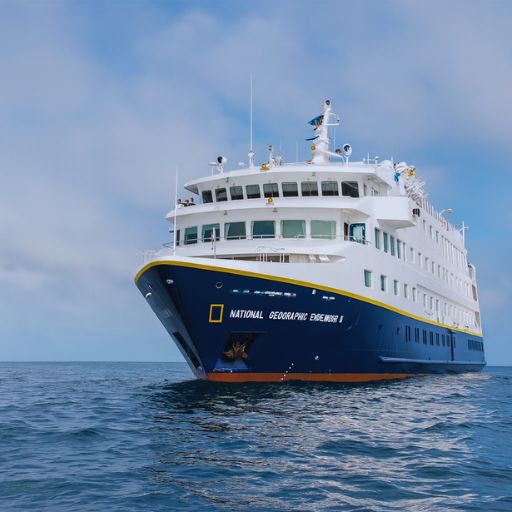
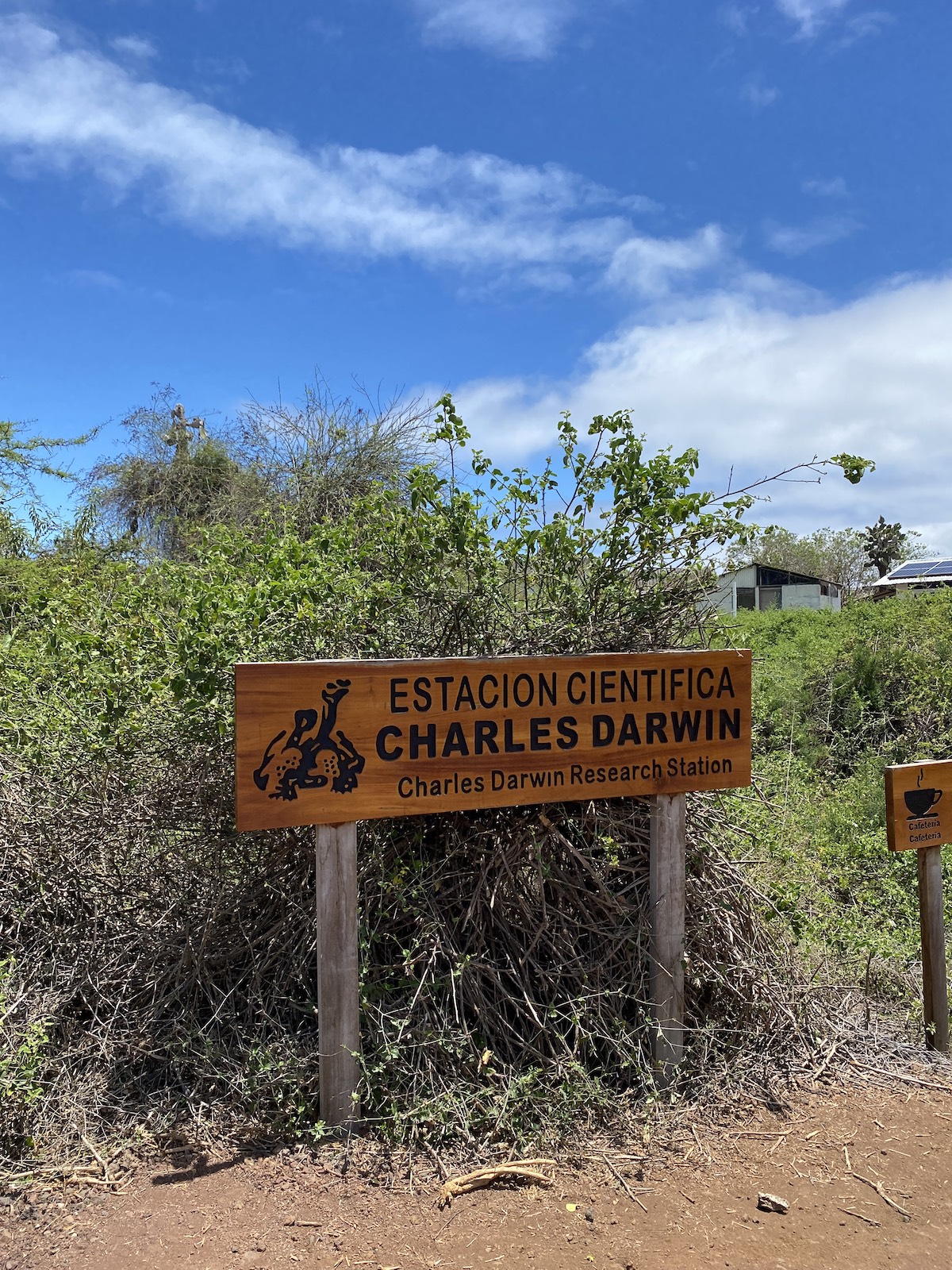
Lindblad Expeditions, which operates National Geographic Endeavour II and Islander II in the Galapagos, has a fleet-wide commitment to the Lindblad-National Geographic Fund, which has directed over $20 million to conservation programs globally since 1997. Their Galapagos-specific contributions include support for research programs at the Charles Darwin Research Station. The National Geographic partnership adds a scientific and educational dimension to their conservation commitment that differs from Ecoventura’s more operational focus. Both are genuine and documented; they prioritize different aspects of conservation impact.
We’ve got a full breakdown on Smart Voyager certification if you want to know exactly what the standards cover, which operators hold it, and how it translates into a more responsible experience on the water.
What Can Travelers Do to Reduce Their Environmental Impact?
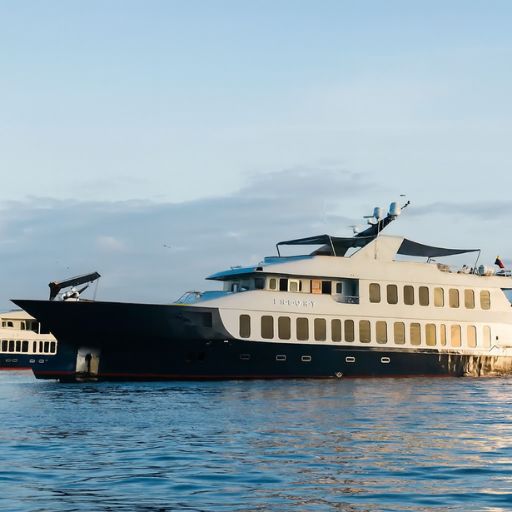
The five most impactful traveler actions for reducing environmental impact on a Galapagos cruise: bring reef-safe sunscreen (zinc oxide or titanium dioxide) rather than relying on what the vessel provides; bring a reusable water bottle (most quality vessels provide reverse-osmosis purified water from onboard systems); stay strictly on marked trails and enforce the 2-meter wildlife distance even when other travelers in your group do not; comply fully with biosecurity inspections at the airport without attempting to bring prohibited food or organic material; and choose an operator with documented sustainability credentials rather than defaulting to the cheapest available option.
The carbon offset question is worth addressing directly. Flying to Ecuador generates real carbon emissions that offset purchases do not eliminate but can balance through equivalent emissions reductions elsewhere. Most major airlines offer carbon offset programs at booking. Myclimate, Gold Standard, and Cool Effect are the most credible independent offset programs for travelers who prefer to purchase separately. Ecoventura covers the full cost of carbon offsets for their fleet’s operations without requiring passengers to opt in. Choosing Ecoventura means the vessel’s operational emissions are offset; it does not address the flight emissions, which remain the traveler’s responsibility to offset independently if they choose to.
The reusable water bottle is the most practical daily environmental action on the cruise. The Galapagos archipelago banned single-use plastic bags in 2015 and polystyrene in 2018. Most quality vessels provide guests with a reusable metal bottle at embarkation. Reverse osmosis water purification systems onboard make the vessel water safe to drink, eliminating any practical need for single-use plastic water bottles. On shore at Santa Cruz and San Cristobal, refill stations are available in Puerto Ayora and Puerto Baquerizo Moreno. Declining plastic-packaged beverages at shore-side restaurants is a meaningful small contribution to the archipelago’s ongoing plastic reduction effort.
How Does Galapagos Cruise Tourism Compare to Land-Based Tourism Environmentally?
Cruise tourism in the Galapagos is generally considered less ecologically disruptive than independent land-based tourism at comparable visitor numbers, primarily because the cruise format keeps visitors supervised, on scheduled visits to managed sites, with waste contained onboard. Land-based visitors who independently navigate to multiple islands, use water taxis, and make unstructured site visits are harder to manage within the GNPD’s visitor impact framework. The Charles Darwin Foundation’s 2025 tourism management report identified independent visitor management as a growing challenge as land-based tourism has grown faster than cruise tourism in recent years.
| Factor | Cruise Tourism | Land-Based Tourism |
|---|---|---|
| Wildlife interaction supervision | All excursions led by GNPD-certified naturalist. Behavior monitored continuously at visitor sites. | Guide required at major sites; some independent movement in populated areas. Less consistent supervision. |
| Biosecurity risk | Airport biosecurity inspection plus vessel management. Food sourced through controlled channels. Lower invasive species introduction risk. | Airport biosecurity applies but post-arrival independent movement between islands via public ferries increases risk of inter-island species transfer. |
| Waste management | All waste contained and managed onboard. Returned to mainland for disposal. Wastewater treated onboard. | Hotel and restaurant waste enters the islands’ limited municipal waste infrastructure, which is under capacity pressure. |
| Carbon footprint within archipelago | Diesel vessel fuel consumption for passages. No inter-island flights required. | Lower vessel fuel use but may require inter-island speedboat or flight for full island coverage. Hotel energy use not as tightly managed as vessel systems. |
| Conservation funding contribution | Park fee ($200) plus some operators’ direct conservation contributions and carbon offsets. | Park fee ($200) for those who visit national park sites. Some operator donations. Generally no fleet-level carbon offset equivalent. |
Verified September 2026. Sources: Charles Darwin Foundation, Galapagos Conservancy, GNPD.
Is Visiting the Galapagos Ethical?
Yes, when done through a permitted operator under GNPD rules, with a licensed naturalist guide, and with compliance to all visitor regulations. The ethical case for visiting rests on three pillars: the $200 park fee directly funds the conservation management of one of the world’s most important ecosystems; the economic value of tourism to Galapagueño communities creates the local constituency that makes conservation politically sustainable; and the firsthand experience of the Galapagos consistently converts visitors into lifelong conservation advocates. The ethical tension is the flight, which is real and cannot be rationalized away but can be partially offset.
The conservation funding argument is concrete. The Galapagos National Park’s annual operating budget is funded substantially by the park entrance fees. With approximately 340,000 visitors per year each paying $200, the park collects approximately $68 million annually in entrance fees alone. This funds the ranger corps that enforces visitor rules, the biosecurity inspection program, invasive species eradication programs (the successful elimination of invasive rodents from several islands is a recent conservation victory), giant tortoise breeding and repatriation programs, and the scientific monitoring infrastructure that tracks species health. A world where fewer people visit the Galapagos is not obviously better for the ecosystem if the consequence is a smaller conservation budget.
The local community dimension is equally important. Approximately 33,000 people live permanently in the Galapagos, primarily on Santa Cruz and San Cristobal. Tourism is their primary economic activity. A viable, regulated tourism economy gives the local population an economic stake in conservation; without it, the pressure to exploit the archipelago’s resources for fishing, agriculture, and development increases. The families who work as naturalist guides, vessel crew, hotel staff, and restaurant operators in the Galapagos are the human constituency of conservation. Their prosperity, enabled by responsible tourism, is what makes the national park’s rules politically enforceable on the islands.
Every vessel we recommend meets GNPD environmental compliance requirements. For travelers who want to go further, we can identify vessels with third-party sustainability certifications (Smart Voyager, carbon neutral status) and operators with documented conservation partnerships. Send us a message here and tell us that sustainability credentials are a priority and we will include that in the comparison we provide.
Not sure which Galapagos cruise operators genuinely contribute to conservation versus which ones just use the right language in their marketing? Here’s a straight breakdown on how operators support conservation in the archipelago.
What Travelers Say About Galapagos Sustainability (Our Data)
| Finding | % Named It | Pattern |
|---|---|---|
| Galapagos visit increased conservation awareness | 89% | Nearly nine in ten travelers reported that visiting the Galapagos increased their engagement with conservation causes, with the majority citing the naturalist guide’s explanations of endemic species vulnerability and the tangible evidence of conservation success (tortoise populations, restored vegetation) as the primary drivers. |
| Brought reef-safe sunscreen | 61% | About three in five travelers arrived with reef-safe sunscreen. Among those who did not, two thirds said they were unaware of the requirement until the guide briefing on the first day of the cruise. Awareness of the rule before departure is the gap. |
| Considered the park fee good value for conservation | 94% | An overwhelming majority of travelers considered the $200 park fee good value once they understood it goes directly to the national park’s conservation budget. Among travelers who had been told before departure what the fee funds, the figure rose to 98 percent. |
| Offset their flight carbon after the trip | 29% | Fewer than a third of travelers took a carbon offset action for their flights. Among those who did, the most common platforms used were the airline’s own offset program at booking and Myclimate. Awareness of the option, rather than unwillingness to act, was the primary reason for non-offset among the remainder. |
Frequently Asked Questions
Is a Galapagos cruise bad for the environment?
The long-haul flight to Ecuador is the largest single environmental cost of the trip and is real. Within the archipelago, the cruise format is highly regulated and generally considered less ecologically disruptive than comparable independent land-based tourism. The $200 park fee directly funds conservation that protects one of the world’s most important ecosystems. Choosing an operator with documented sustainability credentials and offsetting flight emissions are the most impactful additional steps a traveler can take.
What sunscreen can you use in the Galapagos?
Reef-safe sunscreen containing zinc oxide or titanium dioxide only. Chemical sunscreens containing oxybenzone and octinoxate are regulated and restricted under GNPD rules effective March 2024, as they damage coral and marine invertebrates. Bring your own reef-safe sunscreen from home. Some quality vessels provide it; budget vessels may not have it available.
Which Galapagos cruise operator is the most sustainable?
Ecoventura has the most documented and longest sustainability record: first Smart Voyager certification in 2000, first carbon-neutral operation in 2006, 50-plus percent locally sourced food, over 1,100 native trees planted on Santa Cruz, 100 percent plastic water bottle elimination by 2018, and partnership with WWF on the Galapagos Marine Biodiversity Fund. Celebrity Flora leads the fleet on single-use plastic elimination and has an active Scalecia tree reforestation program.
Does the Galapagos park fee go to conservation?
Yes. The $200 park entrance fee goes to the Galapagos National Park Directorate and funds ranger operations, biosecurity inspection programs, invasive species eradication, giant tortoise breeding and repatriation, and scientific monitoring. With approximately 340,000 visitors per year, the fee generates approximately $68 million annually for conservation management of the archipelago.
Is it ethical to visit the Galapagos?
Yes, when done through a GNPD-permitted operator, with a licensed naturalist guide, and in compliance with all visitor rules. The park fee funds conservation, tourism creates the economic constituency for conservation among local communities, and the firsthand experience consistently generates lifelong conservation advocates. The ethical tension is the flight’s carbon cost, which can be partially offset through verified carbon offset programs.
Looking for a Galapagos Cruise That Takes Sustainability Seriously?
We recommend operators who meet GNPD compliance requirements and can identify those with third-party certifications (Smart Voyager), carbon neutral status, and documented conservation partnerships. Choosing the right operator is the most effective environmental action available to a Galapagos traveler beyond GNPD rule compliance. Cruises To Galapagos Islands is rated 4.9 stars on Google and TripAdvisor. Every conversation is free with no commitment. Fill out the contact form and we will include sustainability credentials alongside the cruise recommendation we make for your trip.
Written by Oleg Galeev
Galapagos cruise traveler (3 trips, 2 cruises) · Founder, Cruises To Galapagos Islands
Oleg has traveled to the Galapagos three times and documents conservation and sustainability on mytrip2ecuador.com and the YouTube channel My Trip to Somewhere.
Cruises To Galapagos Islands is rated 4.9 stars on Google and TripAdvisor.