
Galapagos National Park Rules for Cruise Visitors
Quick Summary
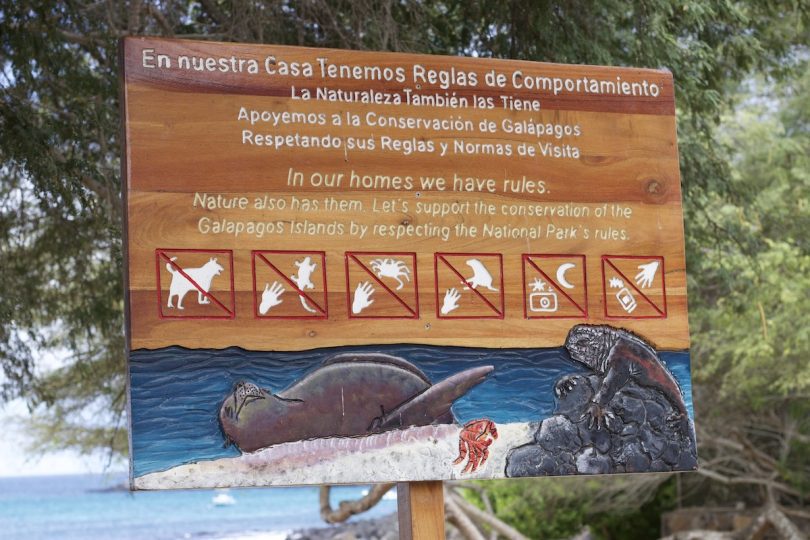
The Galapagos National Park Directorate enforces 14 visitor rules at all protected sites. The ones most likely to catch cruise travelers off guard are: the 2-meter wildlife distance applies even when animals approach you (you must back away); flash photography is prohibited at every visitor site with no exceptions; drones are completely banned for recreational use and require special GNPD permits months in advance for commercial purposes; no food from the vessel may be brought onto trails; no natural material (rock, shell, lava, coral) may be removed; and smoking and campfires are banned across the archipelago. Violations carry fines of $500 to $5,000 USD depending on severity. The naturalist guide is your primary rule enforcer at every site and has the authority to remove non-compliant visitors from excursions.
The 14 Official GNPD Visitor Rules for Galapagos Cruise Travelers
| # | Rule | Practical Notes |
|---|---|---|
| 1 | Visit only with a GNPD-certified naturalist guide | No visitor may enter any protected area unaccompanied. This applies to every site on every cruise, regardless of how many times you have visited before. |
| 2 | Travel only with authorized tour operators and vessels | Every cruise vessel must hold a current GNPD operating permit. Independent boat charter into protected areas without a permit is illegal. |
| 3 | Stay on marked trails only | Paths are demarcated by wooden posts or rope. Off-trail movement is prohibited even when wildlife is visible just a few meters off the path. This rule protects nesting sites, egg burrows, and endemic vegetation. |
| 4 | Maintain 2 meters (6 feet) minimum distance from all wildlife | Applies in all directions, including above (seabirds perched overhead) and below (marine iguanas on the path). When an animal approaches you, move away to maintain the distance rather than standing still. |
| 5 | Never feed wildlife | Feeding disrupts natural foraging behavior and can cause digestive illness. No food from the vessel may be brought onto trails for this reason. |
| 6 | No flash photography at any visitor site | Applies to all camera types including smartphones. Disable flash before the panga departs the vessel. Guides enforce this actively. No exceptions for “just one shot.” |
| 7 | Commercial photography and video require GNPD authorization | Apply at least 15 working days before the start date. Fees vary by project classification. Drone use for commercial purposes requires the same authorization process. |
| 8 | Camping only in authorized areas with advance permission | Request authorization from GNPD offices at least 48 hours in advance. Rarely relevant for cruise travelers; camping is primarily for land-based multi-day hiking itineraries. |
| 9 | Do not introduce food, animals, or plants into the archipelago | Biosecurity inspection at mainland airports enforces this. Fresh fruit, vegetables, seeds, soil, and live organisms are all prohibited. Packaged commercial food is allowed in limited quantities. |
| 10 | Cooperate fully with biosecurity and environmental inspection officials | At both mainland and inter-island checkpoints. Full inspection of luggage is standard; non-cooperation is a serious violation. |
| 11 | No souvenirs made from banned substances | Black coral, shells, lava rock, animal parts, native wood, and vegetation are all prohibited. Purchasing these items from vendors in Puerto Ayora is also illegal and reportable to GNPD. |
| 12 | Leave-no-trace: pack out all trash | No waste of any kind may be left at visitor sites. If you find trash on a trail or beach, carry it back to the vessel for proper disposal. |
| 13 | No smoking; no campfires | Smoking including cigars, cigarettes, and pipes is banned across the archipelago. Campfires are prohibited due to wildfire risk to endemic vegetation. |
| 14 | No motorized water sports, drones, or aerial activities | Jet skis, motorized submersibles, and aerial tours are prohibited. Drones are banned for recreational visitors entirely. No exceptions. Do not attempt to fly a drone in the Galapagos. |
Source: Galapagos National Park Directorate and Galapagos Conservancy. Park visiting hours: 6:00 a.m. to 6:00 p.m. Verified September 2026.
What Are the Official Rules of the Galapagos National Park?
The GNPD publishes 14 official visitor rules that apply to every person entering any protected area of the Galapagos National Park, including all cruise excursion sites, snorkeling sites, and swimming locations. These rules are not advisory guidelines; they are legally enforceable regulations under Ecuadorian law. Violations carry fines of $500 to $5,000 USD depending on severity, and repeat or serious violations can result in removal from the park and from the cruise. Every rule applies equally to every visitor regardless of nationality, vessel class, or number of previous visits.
The rules exist because the Galapagos ecosystem is uniquely vulnerable to human behavioral impact in ways that most wildlife destinations are not. The animals’ fearlessness, which is the defining characteristic of the Galapagos wildlife experience, is also their primary vulnerability. An animal that does not flee from humans can be approached, touched, fed, and disturbed without any visible protest. The 2-meter distance rule, the no-feeding rule, and the flash photography prohibition all address the same underlying problem: that the animals’ lack of fear creates a responsibility on the human side that cannot be discharged by the animal’s behavior. The rules compensate for the fact that the animals will not protect themselves.
The naturalist guide receives a pre-departure briefing from the cruise director covering all 14 rules before the first excursion. Most guides deliver their own briefing on the panga on the way to each visitor site, reminding passengers of the specific rules most relevant to that site’s wildlife. At a blue-footed booby nesting area, the guide emphasizes trail rules and the no-flash rule. At a sea lion colony, the no-touch and distance rules get more emphasis. At a snorkeling site, the no-touching-coral rule and the reef-safe sunscreen reminder come first. The rules are consistent; the emphasis varies by site.
Understanding the rules before you board is one of the practical preparation steps we cover with every traveler we work with. If you have questions about what specific behaviors are and are not permitted at Galapagos visitor sites, we are happy to answer them. Fill out this short form and include any specific rule questions alongside your cruise inquiry.
What Are the Wildlife Interaction Rules on a Galapagos Cruise?
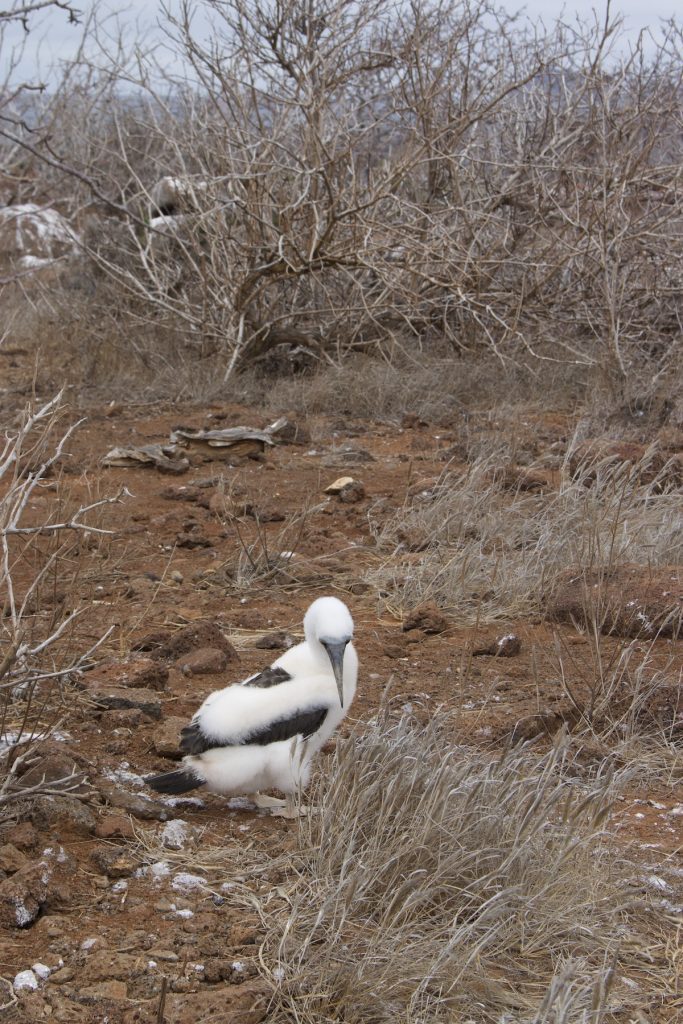
The core wildlife interaction rules are: maintain 2 meters (6 feet) minimum distance from all animals at all times; never touch any wildlife; never feed wildlife anything including natural food items; move away when an animal approaches you rather than standing still; do not make sudden movements or sounds that alter animal behavior; do not bring food from the vessel onto any trail; and do not use selfie sticks or bright-colored clothing near nesting wildlife. These rules apply on land, in the water, and from the panga.
The animal-approaches-you scenario is the most commonly misunderstood rule in practice. Most travelers have been told the 2-meter distance rule but interpret it as a minimum approach distance they must maintain toward animals. The rule is symmetric: when a sea lion pup approaches your snorkel mask, when a marine iguana walks toward you on the trail, when a Nazca booby steps toward you for a closer look, the rule requires you to move away to restore the 2-meter distance. Standing still and letting the animal come to you does not comply with the rule even though it feels passive. The guide will redirect you. Following the redirection immediately is both correct and the right thing to do.
The no-food-on-trails rule is stricter than most travelers expect. You may not bring a water bottle, a snack, or any food item from the vessel onto a visitor site trail. Water bottles are permitted, but any food or food packaging that could attract wildlife, introduce non-endemic organic matter to the site, or be left behind is prohibited. Most vessels offer a snack on return from the morning excursion rather than before it for this reason. The rule applies even to the beach sites where sea lions are present; a sea lion that associates humans with food is a sea lion at risk of behavioral disruption that affects its long-term survival.
What Photography Rules Apply in the Galapagos National Park?
The photography rules for personal use are: no flash photography at any visitor site under any circumstances; no tripods at sites where they would require off-trail placement; no drones for recreational visitors under any circumstances; normal photography without flash using any camera type is permitted and unrestricted. For commercial photography or video, GNPD authorization is required, applied for at least 15 working days before the start date. Unauthorized commercial filming is a serious violation regardless of how it is framed at the time.
The flash photography rule applies to every device with a flash capability: DSLRs, mirrorless cameras, point-and-shoots, and smartphones. The guide’s standard instruction before each excursion is to disable flash on every device before leaving the panga. Checking your flash setting before stepping ashore is a simple practice that prevents an embarrassing correction from the guide mid-excursion. Disable flash in the camera settings rather than relying on the camera’s auto mode to not trigger it; auto flash can activate in bright light in ways the photographer does not expect.
The drone prohibition is absolute for recreational visitors. The Galapagos Islands restrict drone flights strictly to research and monitoring purposes or with special permission for commercial purposes. No tourist or recreational visitor may fly a drone anywhere in the archipelago. This is not a rule that applies only within designated no-fly zones; it is a blanket prohibition for all recreational drone operation in the Galapagos National Park and surrounding marine reserve. The reasoning is straightforward: drone cameras used for commercial filming must obtain prior authorization from the GNPD, and the acoustic and visual disturbance that a drone creates is incompatible with the low-impact visitor framework the GNPD maintains. Several travelers have had drones confiscated at the Baltra airport. Do not bring a drone to the Galapagos with the intention of flying it.
Photography is one of the primary activities on any Galapagos cruise, and the camera gear article in this series covers what equipment to bring and how to use it effectively within the rules. If you are planning specific photography goals for your cruise, reach out here and we can match you with vessels and itineraries that best support wildlife photography within GNPD guidelines.
What Are the Rules About What You Can Bring Into and Out of the Galapagos?
Into the Galapagos: fresh fruit, vegetables, seeds, soil, live animals, and plant material are all prohibited. Packaged commercial food in limited quantities is permitted. Reef-safe sunscreen (zinc oxide or titanium dioxide only) is required for any sunscreen used in or near the water. Out of the Galapagos: black coral, shells, lava rock, animal parts, native wood, vegetation, and any natural material from visitor sites are all prohibited. Commercial souvenirs made from these materials are also prohibited regardless of where they were purchased in the islands.
The biosecurity inspection at Quito and Guayaquil airports is the enforcement mechanism for the into-Galapagos rule. Guests are not allowed to bring food from the Galapagos cruise onto the trails, and the same biosecurity logic applies to food brought from the mainland to the islands: fresh organic material carries seeds, soil microbes, and invertebrates that can establish as invasive species. The inspection is thorough and the inspectors are specifically trained to identify organic material that may not be obviously prohibited. Declare anything you are uncertain about. The inspectors are not interested in penalizing travelers who disclose; they are focused on preventing introductions.
The out-of-Galapagos souvenir prohibition is worth reading carefully before shopping in Puerto Ayora or Puerto Baquerizo Moreno. Some vendors in the populated areas sell items made from shells, lava rock, and coral that are nominally legal products in the market but are illegal to export from the archipelago. The GNPD rule is explicit: do not take or buy any products or souvenirs made from banned substances, including black coral, shells, lava rock, animal parts, or any native wood or vegetation prior to leaving the Galapagos. The fact that the vendor is selling it does not make it legal to purchase and remove. If you buy such an item and it is discovered at airport security on departure, it will be confiscated and you may face a fine.
What Happens If You Break the Rules in the Galapagos National Park?
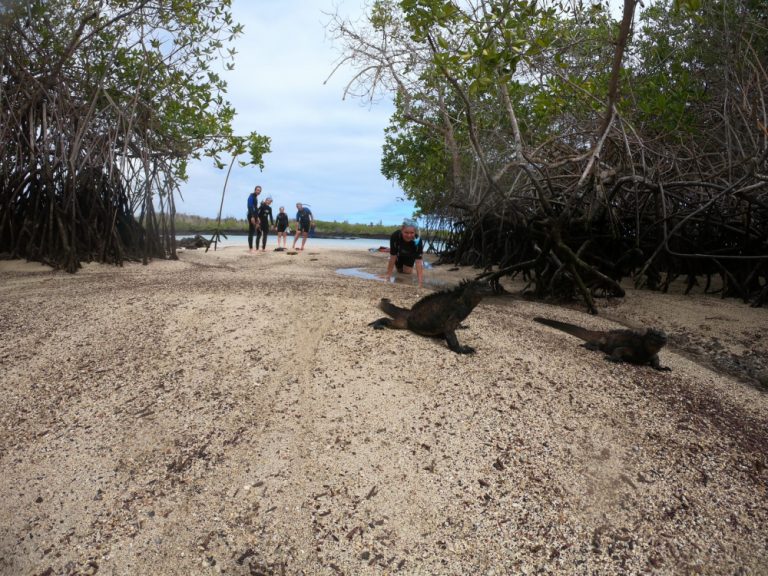
Violations of GNPD visitor rules carry fines of $500 to $5,000 USD depending on severity. Minor first violations typically result in a verbal warning from the naturalist guide, followed by a formal warning from GNPD rangers if repeated. Serious violations including touching wildlife, removing natural material, or operating a drone result in immediate fines. The naturalist guide has authority to remove non-compliant visitors from excursions and return them to the vessel. In severe cases, visitors may be removed from the park entirely before the cruise ends.
The naturalist guide is the first line of enforcement at every visitor site, but GNPD rangers also patrol the most visited sites on patrol vessels and on foot. Rangers carry enforcement authority and issue formal citations. The fine range of $500 to $5,000 is applied based on severity: a first-time inadvertent flash photography violation is handled with a warning; deliberately touching a marine iguana for a photograph is a fineable offense; removing lava rock from a visitor site is a serious violation at the upper end of the fine range. The rangers take their mandate seriously. The rules are not selectively enforced based on nationality, vessel class, or perceived tourist status.
The removal-from-excursion scenario is the consequence most relevant to cruise travelers. A guide who repeatedly redirects a traveler about the wildlife distance rule and receives non-compliance has the authority and the obligation to return that traveler to the panga and therefore to the vessel. The rest of the group’s excursion continues; the non-compliant traveler waits on the vessel. This consequence is documented in traveler accounts and is not hypothetical. The guide’s primary obligation is to the ecosystem; their authority to enforce the rules is backed by the GNPD and by the vessel operator whose permit depends on compliance.
How Do the Rules Differ Between Visitor Sites, Snorkeling Sites, and Onboard the Vessel?
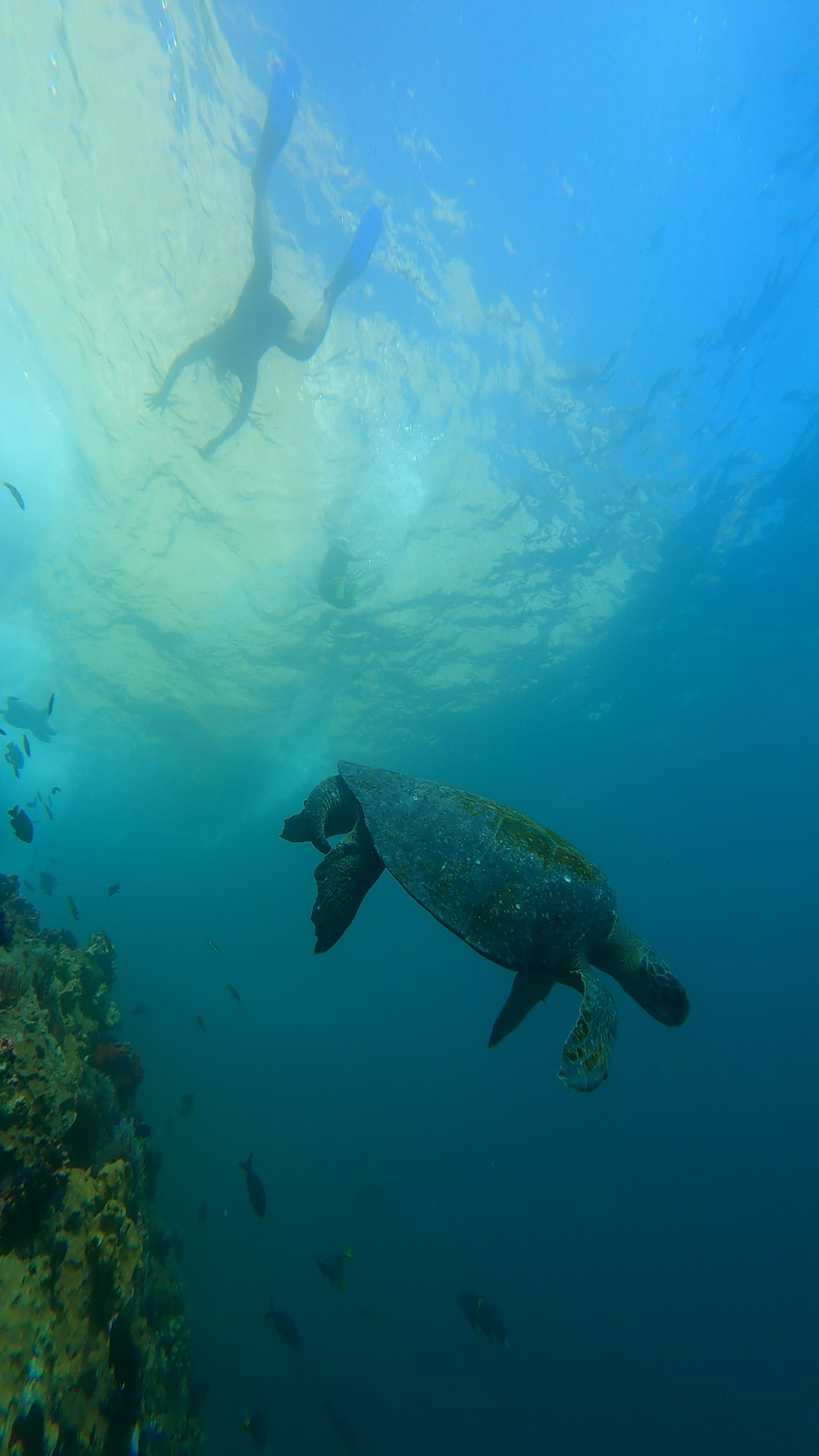
The 14 GNPD rules apply at all protected visitor sites. At snorkeling and swimming sites, additional underwater rules apply: no touching of coral, rocks, or marine animals; no standing on the reef; no use of harmful sunscreen in the water (reef-safe only); and no approaching marine life to within arm’s reach. Onboard the vessel, the GNPD rules do not formally apply, but vessel operators enforce their own environmental policies covering single-use plastic use, waste management, water consumption, and noise levels, particularly during wildlife-rich anchorages where sound carries to wildlife onshore.
| Location | Key Rules in Effect | Who Enforces |
|---|---|---|
| Land visitor sites | All 14 GNPD rules. Marked trails only. 2-meter distance. No flash. No food. No smoking. No drones. Park hours 6 a.m. to 6 p.m. | Naturalist guide (primary). GNPD rangers (secondary, at major sites). |
| Snorkeling and swimming sites | 2-meter distance from all marine wildlife. No touching coral, rocks, or sea floor. No standing on reef. Reef-safe sunscreen only. No chasing marine animals. No flash underwater. | Naturalist guide in the water or from panga. Dive master on vessels with one assigned. |
| Panga (dinghy) during transit | Wildlife rules apply en route. No reaching out to touch sea lions or marine animals at panga side. No flash photography from the panga. Sound levels kept low near wildlife aggregations. | Naturalist guide and panga driver. |
| Onboard the vessel | GNPD rules do not formally apply onboard. Operator’s environmental policies apply: single-use plastic policy, waste management, water conservation, noise during wildlife anchorages. Smoking typically restricted to designated areas or prohibited entirely. | Vessel operator policies enforced by cruise director and crew. |
Verified September 2026.
How Do the Naturalist Guide and GNPD Rangers Enforce the Rules?
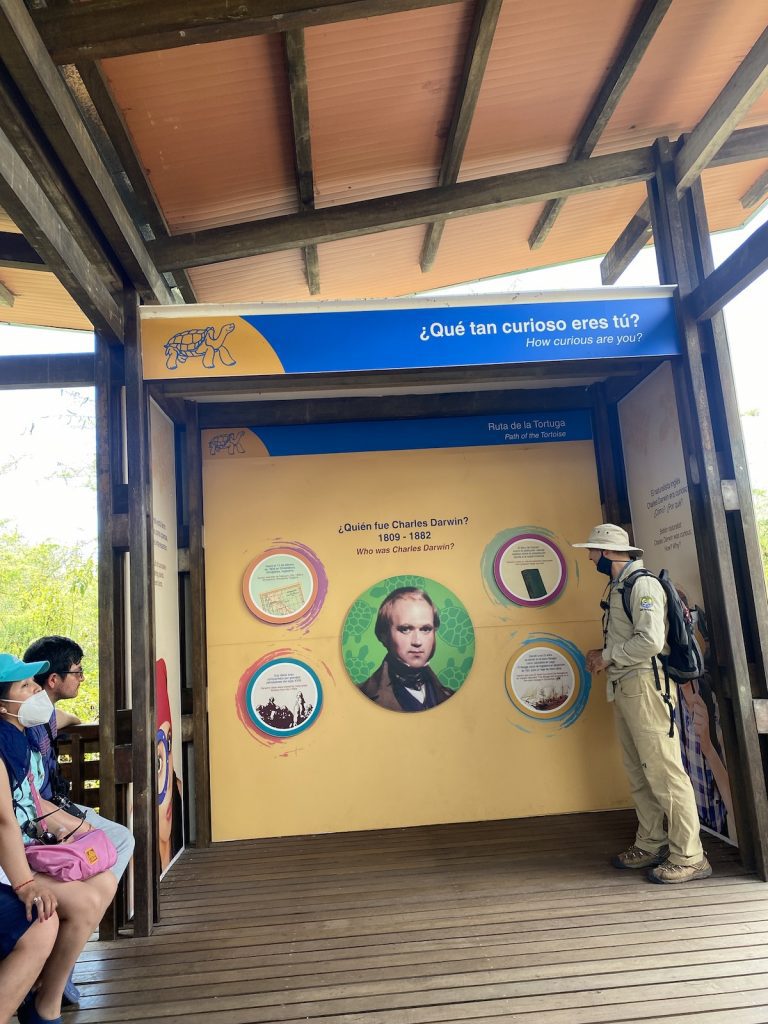
The naturalist guide is the primary rule enforcer at every visitor site, with authority backed by the GNPD and the vessel operator. Their enforcement approach is graduated: verbal reminder first, direct instruction second, removal from the excursion third. GNPD rangers conduct independent patrols of the most frequented visitor sites and can issue formal fines without prior warning for serious violations. The guide’s GNPD certification depends on maintaining visitor compliance; a guide who consistently fails to enforce the rules risks losing their operating license.
The guide’s enforcement dynamic is worth understanding as a traveler. The naturalist guide is not a tourism professional who happens to recite rules; they are a licensed GNPD officer whose certification requires demonstrated visitor management capability. When a guide corrects you about flash photography or wildlife distance, they are doing so as a matter of professional obligation, not personal preference. Following the correction immediately and without argument is not merely polite; it is what the GNPD framework requires of every visitor. Guides who experience consistent non-compliance from a passenger have both the authority and the professional obligation to remove that passenger from the excursion.
Rangers operate from GNPD patrol vessels and conduct regular inspections of visitor sites during operating hours. At the most visited sites, Espanola’s Punta Suarez, Genovesa’s Prince Philip’s Steps, and Santa Cruz’s Charles Darwin Research Station among others, a ranger presence is common during peak season. Rangers are distinguishable by their GNPD uniforms. Their enforcement authority is independent of the naturalist guide’s authority: a ranger can issue a citation for a violation the guide may have already addressed, and can require the vessel captain to hold at anchor while an investigation is completed if a serious violation is alleged. Cooperation with rangers is rule 10 of the GNPD’s 14 visitor regulations.
Vessels with the best naturalist guides tend to have the fewest rule compliance issues because guide quality correlates with briefing thoroughness and traveler preparation. We recommend vessels specifically for the quality of their naturalist guides alongside other criteria. Send us a message here and guide quality will be part of the comparison we provide.
What Travelers Report About GNPD Rules in Practice (Our Data)
From feedback collected through mytrip2ecuador.com and our YouTube audience:
| Finding | % Named It | Pattern |
|---|---|---|
| Flash fired accidentally despite intention to disable it | 28% | More than a quarter of travelers reported accidentally firing flash at a visitor site despite intending to disable it, almost always on a smartphone where auto-flash reactivated. The guide corrected them and the flash was properly disabled. No fines resulted from first-time accidental flash incidents in any case reported. |
| Wildlife approached within the 2-meter distance unprompted | 91% | Nearly every traveler reported that wildlife approached within the 2-meter distance on at least one occasion during the cruise. Sea lion pups and marine iguanas were the most frequent. The guide instructed passengers to back away; most did so successfully. A minority of travelers reported other passengers in their group not backing away as instructed. |
| Saw another traveler corrected or removed by a guide | 34% | A third of travelers witnessed a guide correction of another traveler, most commonly for wildlife distance violation or attempted wildlife photography involving approach. Guide removal of a passenger from an excursion was observed by 7 percent of travelers. In all documented cases the violation involved repeated non-compliance after warnings. |
| Naturalist briefing before each excursion improved rule compliance | 84% | Among travelers who received a thorough rules briefing from their naturalist before each excursion (as opposed to a one-time briefing at embarkation), 84 percent reported higher rule compliance across their group throughout the cruise. Per-excursion site-specific briefings were significantly more effective than generic initial briefings. |
Frequently Asked Questions
What are the most important Galapagos National Park rules for cruise visitors?
The most practically impactful are: stay on marked trails only; maintain 2 meters from all wildlife at all times including when animals approach you; disable flash on all cameras and smartphones before every excursion; bring no food from the vessel onto trails; remove nothing natural from visitor sites; do not attempt to fly a drone anywhere in the archipelago; and cooperate fully with biosecurity inspections at mainland and inter-island checkpoints.
Are drones allowed in the Galapagos?
No. Drones are completely banned for recreational visitors in the Galapagos National Park. Commercial filming with drones requires a formal GNPD application submitted at least 15 working days before the start date, with fees that vary by project classification. The ban is enforced at Baltra airport. Do not bring a drone to the Galapagos with the intention of flying it recreationally.
What happens if you break Galapagos National Park rules?
Fines range from $500 to $5,000 USD depending on severity. Minor first violations typically result in a verbal warning from the naturalist guide. Repeated non-compliance leads to removal from the excursion. Serious violations including touching wildlife, removing natural material, or unauthorized drone operation result in immediate GNPD ranger fines. Serious cases can result in removal from the park before the cruise ends.
Can you touch animals in the Galapagos?
No. Touching any wildlife is prohibited under GNPD rules regardless of whether the animal initiates contact. When an animal approaches within 2 meters, the rule requires you to back away rather than allowing contact. This applies to sea lions, marine iguanas, tortoises, birds, and all marine life during snorkeling. The animals’ fearlessness does not create permission to touch them.
What can you not take out of the Galapagos?
You may not remove black coral, shells, lava rock, animal parts, native wood, or any vegetation from the archipelago. Souvenirs made from these materials are also prohibited regardless of where they were purchased in the islands. Attempting to export these items is a violation of Ecuadorian law and the GNPD regulations. Customs officials at departure check for these items.
Planning a Galapagos Cruise and Want to Be Fully Prepared?
Knowing the rules before you board means your excursions run smoothly and your guide can focus on the wildlife interpretation rather than rule corrections. We brief every traveler we work with on the practical rule implications for the specific sites on their itinerary, alongside the cruise booking. Cruises To Galapagos Islands is rated 4.9 stars on Google and TripAdvisor. Every conversation is free with no commitment. Fill out the contact form and we will include a practical pre-departure rules briefing alongside the cruise recommendation we make for you.
Written by Oleg Galeev
Galapagos cruise traveler (3 trips, 2 cruises) · Founder, Cruises To Galapagos Islands
Oleg has experienced GNPD visitor rules firsthand across multiple Galapagos visits and documents the archipelago on mytrip2ecuador.com and the YouTube channel My Trip to Somewhere.
Cruises To Galapagos Islands is rated 4.9 stars on Google and TripAdvisor.