
Galapagos Cruise vs Other Wildlife Cruises: Value Comparison
Quick Summary
Each of the four major wildlife cruise destinations offers something the others cannot. The Galapagos delivers close-range fearless wildlife encounters with 97 percent endemism and the shortest minimum trip length of any major expedition destination. Antarctica delivers continental-scale wilderness, 200,000-strong penguin colonies, and the most dramatic landscape on earth but requires 12-plus days and the roughest sea crossing in wildlife travel. The Amazon delivers the planet’s greatest biodiversity in a year-round accessible rainforest, at the lowest price of the four, but wildlife sightings are less guaranteed than in the other three. Borneo delivers the only wild orangutan encounter possible in a river cruise format, at modest cost, in one of the most accessible Southeast Asian countries. None of these is a substitute for the others. Each is best for different travelers and different travel priorities.
Four Wildlife Cruise Destinations: Key Comparison
| Factor | Galapagos | Antarctica | Amazon | Borneo |
|---|---|---|---|---|
| Entry price (7 to 8 days) | $1,500 to $3,000 | $7,500 to $12,000 (12-plus days) | $1,400 to $5,000 | $500 to $3,000 |
| Minimum sensible trip length | 7 to 8 days | 12 to 15 days | 5 to 7 days | 4 to 7 days |
| Wildlife encounter certainty | Very high. Animals are fearless and present at every site. | Very high for penguins and seals. Whale sightings variable. | Moderate. Dense vegetation limits sightings; pink dolphins and birds reliable. | High for orangutans at key sites; proboscis monkeys reliable. |
| Physical difficulty | Low to moderate. Sea crossings can be rough. | Moderate. Drake Passage crossing can be very rough. Cold and variable weather. | Low. Heat and humidity are the main discomforts. | Low. River conditions calm; humidity significant. |
| Season dependency | Year-round with seasonal species variation | November to March only | Year-round; wet and dry seasons have different advantages | Year-round; avoid extreme monsoon months |
| Endemism | 97% of reptiles, many birds found nowhere else | Low endemism; penguins and seals found elsewhere | Highest total biodiversity on earth; lower per-site endemism | High; orangutans, proboscis monkeys, and pygmy elephants endemic |
Prices are per person approximate ranges for the itinerary lengths noted. Verified September 2026.
How Does a Galapagos Cruise Compare to an Antarctica Expedition?
The Galapagos and Antarctica are the two most frequently compared wildlife cruise destinations, and they are more complementary than competitive. Antarctica delivers scale that the Galapagos cannot: 200,000-strong penguin colonies, continent-wide ice and volcanic rock landscapes, and the psychological experience of visiting the most remote major land mass on earth. The Galapagos delivers intimacy that Antarctica cannot: animals that walk around your feet, clear warm-water snorkeling with marine life at arm’s length, and a 7-day minimum commitment versus Antarctica’s 12 to 15 days.
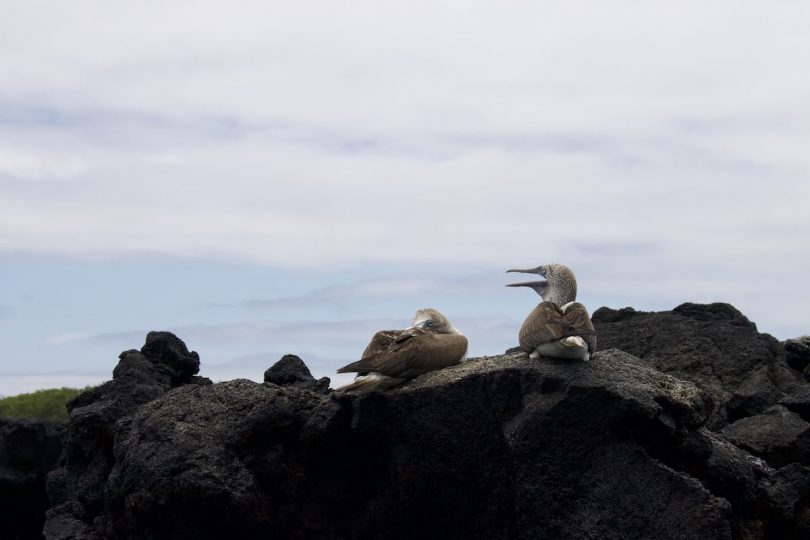
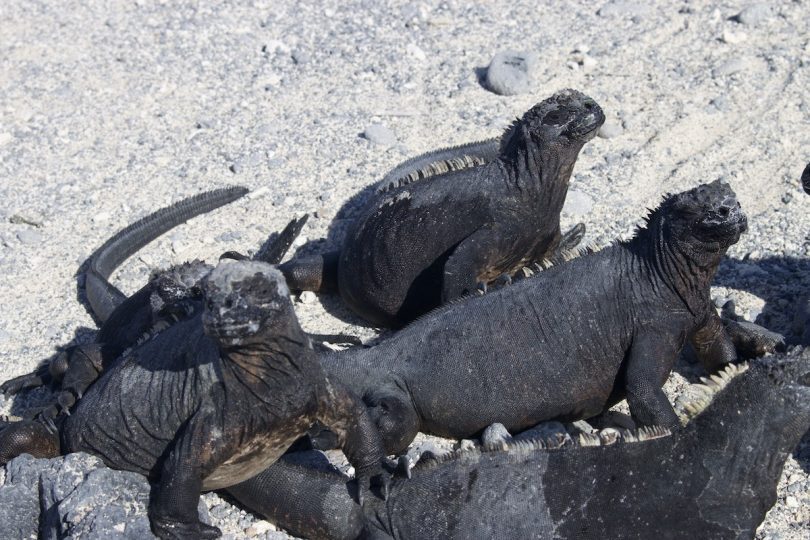
The fundamental wildlife experience is different in kind, not just in species. In the Galapagos, a blue-footed booby will perform its mating dance two feet from you while you stand still, because it has never learned to fear humans. A marine iguana will sun itself on the trail until you step around it. A sea lion pup may approach your snorkel mask out of curiosity. This intimacy is the defining Galapagos experience and has no equivalent in Antarctica. Antarctica’s wildlife is spectacular in different terms: a king penguin rookery of 100,000 birds produces a sound and smell experience that is overwhelming rather than intimate. Both are extraordinary; they are not the same experience.
The logistics gap is significant. Antarctica is accessible only from Ushuaia in Argentina (or via fly-cruise from Punta Arenas in Chile), requires a two-day Drake Passage crossing each way, and makes no practical sense for less than 12 days. Entry-level Antarctica expedition prices start at $7,500 per person for 12 days, making it roughly double the cost of a comparable Galapagos cruise for a longer trip with more demanding travel. The Galapagos is accessible by commercial flight to Quito and a 3-hour domestic flight, workable as a standalone week of travel. Antarctica requires at minimum two weeks of vacation time and is impractical to add to other South American destinations without significant planning.
The seasonal constraint is Antarctica’s most significant limitation. The Antarctic travel season runs November to March only. If your calendar does not accommodate those months, Antarctica is not available to you that year. The Galapagos operates year-round with genuine wildlife activity in all months. For travelers with constrained vacation windows, this flexibility is material.
The Galapagos and Amazon are frequently combined in a single Ecuador trip, which we plan regularly. If you are deciding between destinations or want to combine the Galapagos with another Ecuador experience, we can help you structure the right itinerary. Fill out this short form and tell us how many days you have and what wildlife experiences matter most to you.
How Does the Galapagos Compare to an Amazon River Cruise?
The Amazon and the Galapagos are the most natural combination for travelers visiting Ecuador, since the Ecuadorian Amazon (accessed from Quito via Coca) is 40 minutes by plane from the same hub city as the Galapagos domestic flights. The Amazon delivers the planet’s greatest biodiversity in volume: thousands of bird species, pink river dolphins, river otters, caimans, anacondas, and the immersive sensory experience of primary rainforest. The Galapagos delivers higher sighting certainty and closer encounters with a smaller set of species in a more visually dramatic landscape.
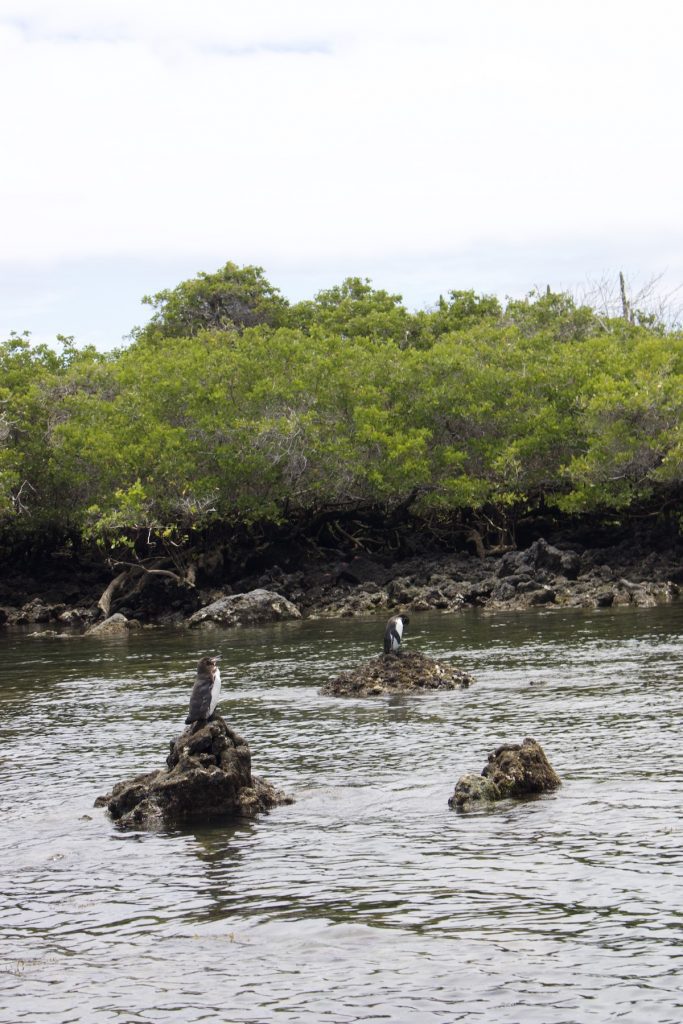
The wildlife sighting comparison requires honesty. The Amazon contains more species than any ecosystem on earth, but dense vegetation and the natural wariness of most Amazon wildlife means that sightings are less guaranteed than in the Galapagos. A first-time Amazon river cruiser may see fifty bird species including several macaw species, pink river dolphins on every outing, and caimans on night safaris, while the jaguar and giant otter remain elusive. In the Galapagos, every visitor sees marine iguanas, sea lions, blue-footed boobies, frigatebirds, Galapagos penguins, and sea turtles on virtually every cruise regardless of season. The Amazon offers the possibility of more extraordinary sightings; the Galapagos offers a higher probability of its specific extraordinary sightings.
The cost comparison favors the Amazon significantly. Amazon river cruises in Ecuador and Peru range from $1,400 to $5,000 per person for 5 to 8 days, with quality mid-range options including the Manatee Amazon Explorer and Sacha Lodge at the lower end of the premium tier. The Galapagos mid-range equivalent for the same duration runs $3,000 to $5,500 per person. For travelers on a tight budget who want a wildlife expedition in South America, an Amazon river cruise delivers a genuinely excellent experience at roughly half the Galapagos price. The species and ecosystem are entirely different, but both are genuinely world-class.
How Does the Galapagos Compare to a Borneo Wildlife Cruise?
Borneo offers the most affordable wildlife cruise experience of the four destinations and the only wild orangutan encounter available in a river cruise format. A klotok (converted traditional houseboat) journey through Tanjung Puting National Park in Indonesian Kalimantan costs $500 to $3,000 per person for 4 to 7 days and delivers almost-guaranteed wild orangutan sightings at the Camp Leakey feeding station, alongside proboscis monkeys, pygmy elephants, and hornbills. Against the Galapagos, Borneo is dramatically cheaper, less physically demanding, and offers a cultural dimension through indigenous Dayak communities that the Galapagos does not have.
The Borneo wildlife cruise experience is qualitatively different from the Galapagos. The orangutan encounter at Tanjung Puting is one of the most moving wildlife experiences available to travelers: watching a great ape that shares 97 percent of human DNA navigate the forest canopy in its natural habitat is emotionally different from the Galapagos marine iguana experience, even though both are spectacular in their own terms. Borneo also offers proboscis monkeys (the bulbous-nosed endemic of Borneo’s mangrove forests), pygmy elephants in Sabah, and irrawaddy dolphins. The total number of species encountered on a Borneo river cruise is comparable to the Galapagos, with less dramatic volcanic landscape and more lush tropical forest.
The accessibility difference is significant. Borneo (specifically Kota Kinabalu in Malaysian Sabah or Pangkalan Bun in Indonesian Kalimantan for Tanjung Puting) is served by direct flights from Singapore, Kuala Lumpur, and Jakarta. For travelers based in Europe or North America, Borneo requires one or two more flight legs than Ecuador, but the total travel time from the UK or Western Europe is comparable to reaching the Galapagos. The lower on-the-ground cost of the Borneo experience offsets the additional flight cost for many travelers. The Galapagos requires 3 connecting flights from most international origins (international to Quito, Quito to Baltra or San Cristobal); Borneo typically requires one to two from major hubs.
The Galapagos and Amazon combination as a single Ecuador trip is something we plan regularly, combining a Quito arrival, 4 to 5 days in the Ecuadorian Amazon (Yasuni, Sacha Lodge, or Manatee Amazon Explorer), and 7 to 8 days on a Galapagos cruise. If this combination appeals to you, reach out here and we will structure the right itinerary for your available days.
Which Wildlife Cruise Destination Has the Best Value for Money?
Value depends entirely on what you are measuring. On cost per day of quality wildlife encounter, Borneo wins. On cost per guaranteed sighting, the Galapagos and Antarctica tie at the top. On total biodiversity experienced for the dollar spent, the Amazon wins. On once-in-a-lifetime uniqueness of experience, Antarctica and the Galapagos share first place for different reasons. There is no single best value destination; the question is which destination delivers the experiences that matter most to you at a price and logistics burden you can sustain.
| Value Metric | Best Destination | Why |
|---|---|---|
| Lowest total cost for a quality experience | Borneo | $500 to $1,500 per person for a 4 to 5-day klotok cruise with almost-guaranteed orangutan sightings. No other destination delivers this level of wildlife encounter at this price. |
| Highest wildlife sighting certainty | Galapagos | Animals at every visitor site regardless of season. No other destination matches the consistency of close-range fearless wildlife encounters per day of cruise. |
| Greatest biodiversity for the budget | Amazon | More species per square kilometer than any other ecosystem. Mid-range Amazon cruise at $2,000 to $3,500 per person delivers hundreds of species. Total volume of wildlife encounter per dollar is unmatched. |
| Most dramatic and unique landscape | Antarctica | Nothing in travel matches the visual scale of the Antarctic Peninsula: icebergs, glaciers, volcanic islands, and 200,000-penguin rookeries in a landscape of absolute wildness. |
| Best combination of accessibility and uniqueness | Galapagos | 97% endemic species, 7-day minimum, commercial flight access, year-round availability, and the only destination where you can snorkel with sea lions and penguins simultaneously. No other destination offers this combination. |
Verified September 2026.
Which Destination Is Easier and Safer to Travel To?
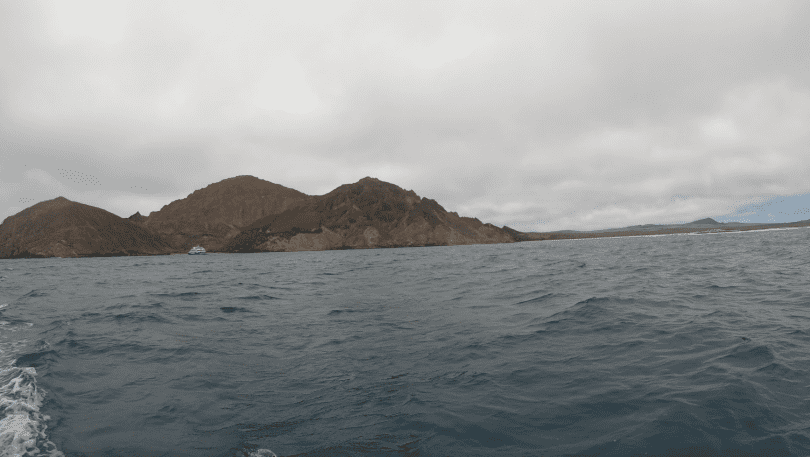
The Galapagos is the easiest major wildlife cruise destination to reach and manage logistically. Two commercial flights from any major city (international to Quito, Quito to Baltra or San Cristobal), no visa required for most nationalities, a well-established cruise infrastructure, English widely spoken by guides, and a total trip structure that works in 10 to 12 days including the flights. Antarctica is the most logistically demanding: Ushuaia routing, Drake Passage crossing, November to March season only, and 14-plus days minimum. The Amazon and Borneo sit between these in complexity.
The safety picture across all four destinations is reassuring but different in character. The Galapagos has no predators, no dangerous insects, no political instability within the national park, and is one of the most visitor-managed ecosystems in the world. Antarctica has no permanent human population, no diseases, no crimes, but extreme cold and weather variability require specific gear and add medical evacuation costs if something goes wrong (standard medical evacuation limits of $100,000 to $250,000 are sometimes insufficient for a polar evacuation). The Amazon’s safety challenges are environmental: heat, humidity, insects, and the occasional unreliability of regional flights in remote areas. Borneo has specific entry requirements for Indonesian Kalimantan and some regional political complexity, but the main visitor areas of Tanjung Puting and Malaysian Sabah are straightforward and well-touristed.
What Wildlife Can You See That Is Unique to Each Destination?
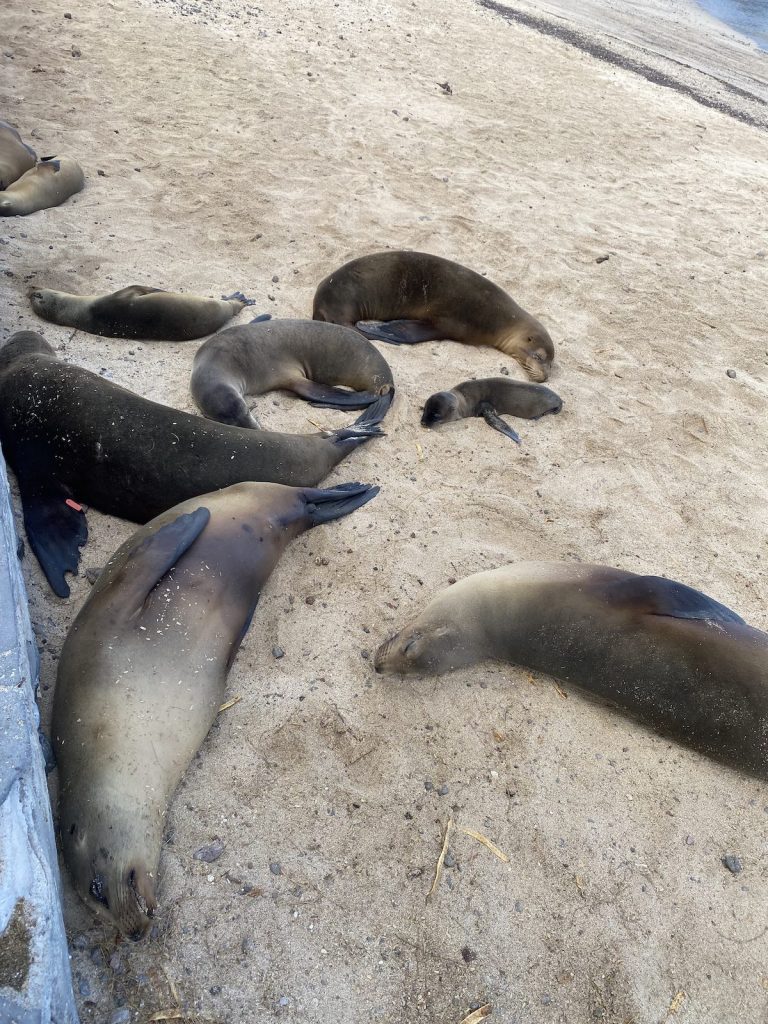
The Galapagos offers 13 species of Darwin’s finches (found only in the Galapagos), the Galapagos marine iguana (the world’s only seafaring lizard), flightless cormorant, waved albatross, Galapagos penguin, and the Galapagos sea lion. Antarctica offers emperor penguins (visible only on deep expeditions), leopard seals, humpback and minke whales, albatrosses of multiple species, and the sub-Antarctic flora of South Georgia. The Amazon offers giant river otters, pink river dolphins, harpy eagles, and jaguars. Borneo offers Bornean orangutans, proboscis monkeys, pygmy elephants, and clouded leopards.
The endemism level matters for how you think about the wildlife value. Galapagos endemism is extraordinarily high: roughly 97 percent of reptiles, 80 percent of land birds, and 20 percent of marine species are found nowhere else on earth. When you see a marine iguana in the Galapagos, you are seeing the only place on earth that animal exists. When you see a gentoo penguin in Antarctica, you are seeing a species that also breeds in the Falkland Islands and sub-Antarctic islands. The Galapagos species are irreplaceable encounters in a way that most Antarctica species are not. Borneo’s orangutans share this irreplaceability: you cannot see a Bornean orangutan in the wild outside Borneo.
If you are in the research phase and trying to decide between the Galapagos and another wildlife destination, we are happy to give you an honest comparison based on your specific travel dates, budget, and what you most want to see. We specialize in Galapagos cruises but we will tell you honestly if another destination is a better fit for your priorities. Send us a message here with what you are considering and we will give you a direct answer.
Which Wildlife Cruise Should You Do First?
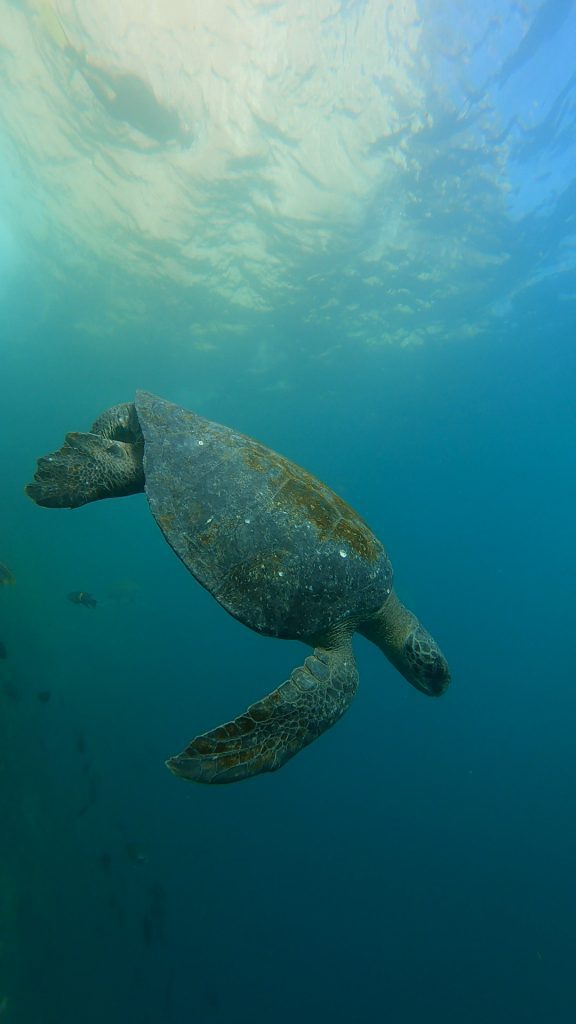
If you have never done a wildlife expedition cruise and are deciding which destination to start with, the Galapagos is the strongest first choice for most travelers. The reasons are logistical and experiential: it is the most accessible, has the shortest minimum commitment, delivers the most guaranteed wildlife encounters per day, and requires no specialist gear or extreme physical preparation. Antarctica is the stronger choice if you want the most dramatic landscape and can commit 14-plus days. The Amazon is the right first choice if budget is the primary constraint. Borneo is right if orangutan encounter is the specific priority.
The sequencing question for travelers who intend to do more than one expedition destination is worth thinking about. The Galapagos is widely regarded as the introduction to expedition wildlife travel because it makes the case for this kind of travel so powerfully and accessibly: the fearless animals at arm’s length convert more first-time expedition travelers into repeat expedition travelers than any other destination. Doing the Galapagos first and then Antarctica, the Amazon, and Borneo in subsequent years is a common and satisfying sequence. Doing Antarctica first is also logical if you are already an experienced traveler and the polar environment is your specific interest, but Antarctica’s scale and cost are more daunting for a first expedition than the Galapagos.
What Travelers Say About the Comparison (Our Data)
From feedback collected through mytrip2ecuador.com and our YouTube audience:
| Finding | % Named It | Pattern |
|---|---|---|
| Galapagos exceeded expectations more than any other destination | 84% | Among travelers who had visited multiple expedition destinations, 84 percent rated the Galapagos as the destination that exceeded their expectations most significantly. The most common reason: they had not anticipated how close the wildlife encounters would be. |
| Combined Galapagos and Amazon in one Ecuador trip | 38% | More than a third of Galapagos cruise travelers combined the cruise with an Amazon river lodge or cruise in Ecuador on the same trip. The most common combination was 4 to 5 days at Sacha Lodge or on the Manatee Amazon Explorer followed by the Galapagos cruise. |
| Galapagos inspired a subsequent expedition cruise | 71% | Among first-time expedition cruise travelers who started with the Galapagos, 71 percent reported having booked or seriously planned a second expedition cruise (most commonly Antarctica or Borneo) within 18 months of their Galapagos trip. |
| Would recommend the Galapagos as the first expedition destination | 91% | An overwhelming majority of experienced multi-destination expedition travelers said they would recommend the Galapagos as the best first expedition cruise for someone new to this style of travel, specifically citing accessibility, guaranteed encounters, and the emotional impact of the fearless wildlife as reasons. |
Frequently Asked Questions
Is the Galapagos or Antarctica a better wildlife cruise?
They are different experiences rather than comparable ones. The Galapagos delivers fearless close-range wildlife encounters, warm-water snorkeling, and 97 percent endemism in a 7-day accessible format. Antarctica delivers continental-scale wilderness, 200,000-strong penguin colonies, and the most dramatic landscape on earth in a 12-plus day expedition. Both are extraordinary; most serious wildlife travelers eventually do both.
Is a Galapagos cruise cheaper than an Amazon cruise?
Generally no. Amazon river cruises start at $1,400 per person for 5 days, making them significantly more affordable than comparable Galapagos options. Mid-range Amazon cruises in Ecuador and Peru run $2,000 to $3,500 per person versus $3,000 to $5,500 for a Galapagos mid-range equivalent. The two destinations offer different wildlife and ecosystems; many travelers combine both on a single Ecuador trip.
Can you combine a Galapagos cruise with the Amazon on the same trip?
Yes, and this is a popular itinerary from Ecuador. From Quito, a 40-minute flight reaches Coca, the gateway to the Ecuadorian Amazon, where lodges including Sacha Lodge and the Manatee Amazon Explorer operate river cruises in Yasuni National Park. A typical combination is 4 to 5 Amazon days followed by 7 to 8 Galapagos cruise days. Total trip length is 14 to 16 days including Quito arrival and departure.
Is Borneo worth visiting for wildlife compared to the Galapagos?
Yes, for different reasons. Borneo’s wild orangutan encounter is one of the most moving wildlife experiences in the world and is available at a fraction of the Galapagos cost. A Tanjung Puting klotok cruise runs $500 to $1,500 per person for 4 to 5 days. The wildlife is different in character: apes rather than reptiles and seabirds, lush rainforest rather than volcanic island landscapes. Borneo and the Galapagos are complementary rather than competing destinations.
Which wildlife cruise destination should a first-time expedition traveler choose?
The Galapagos for most first-timers. It is the most accessible, has the shortest minimum commitment, delivers the most consistent daily wildlife encounters, requires no specialist gear, and is available year-round. Antarctica is the better first choice for travelers who specifically want polar environments and can commit 14-plus days. The Amazon is right if budget is the primary driver.
Decided on the Galapagos, or Still Comparing?
Whether you have decided on the Galapagos or are still weighing it against another destination, we are happy to give you an honest assessment based on your specific travel dates, budget, and what you most want to experience. We specialize in Galapagos cruises but will tell you plainly if the comparison favors another destination for your priorities. Cruises To Galapagos Islands is rated 4.9 stars on Google and TripAdvisor. Every conversation is free with no commitment. Fill out the contact form and we will help you make the right decision for your next wildlife expedition.
Written by Oleg Galeev
Galapagos cruise traveler (3 trips, 2 cruises) · Founder, Cruises To Galapagos Islands
Oleg has traveled extensively in Ecuador including the Amazon and documents the comparison between destinations on mytrip2ecuador.com and the YouTube channel My Trip to Somewhere.
Cruises To Galapagos Islands is rated 4.9 stars on Google and TripAdvisor.