
Galapagos Cruise Food Guide: What to Expect on Budget vs Luxury Ships
Quick Summary
Food on every Galapagos cruise is included in the fare and is generally good. The range across tiers is real and significant. Budget vessels offer simple, filling Ecuadorian home cooking with limited variety. Mid-range vessels serve well-prepared international and Ecuadorian cuisine in a comfortable buffet-and-plated format. Luxury vessels operate at a genuinely different level: Relais and Chateaux chefs on Ecoventura, multi-course plated dinners with locally sourced ingredients, amuse-bouche, afternoon tea, and tableside flambé. The Seaman Journey’s hydroponic farm on San Cristobal is the most distinctive farm-to-table program in the fleet. Special diets are accommodated on most vessels with advance notice; luxury vessels handle them most reliably.
Galapagos Cruise Food by Vessel Class: Quick Reference
| Cruise Class | Dining Format | Food Quality | Local Sourcing |
|---|---|---|---|
| Budget / economy | Buffet, family style | Simple, filling Ecuadorian home cooking. Limited variety. Smaller kitchen and crew. | Basic local produce when available. Primary ingredients from mainland Ecuador. |
| Mid-range (tourist superior) | Buffet breakfast and lunch, plated dinner | Well-prepared international and Ecuadorian cuisine. Good variety. Consistent quality across the voyage. | Mix of local and mainland sourcing. Fresh fish and seafood typically local. |
| First-class (Seaman Journey, Santa Cruz II) | Buffet breakfast and lunch, plated multi-course dinner | Excellent. Chef-trained kitchen, daily changing menus, creative presentation. Seaman Journey operates its own hydroponic farm. | Strong local sourcing emphasis. Seaman Journey: hydroponic farm on San Cristobal supplies fresh organic produce daily. |
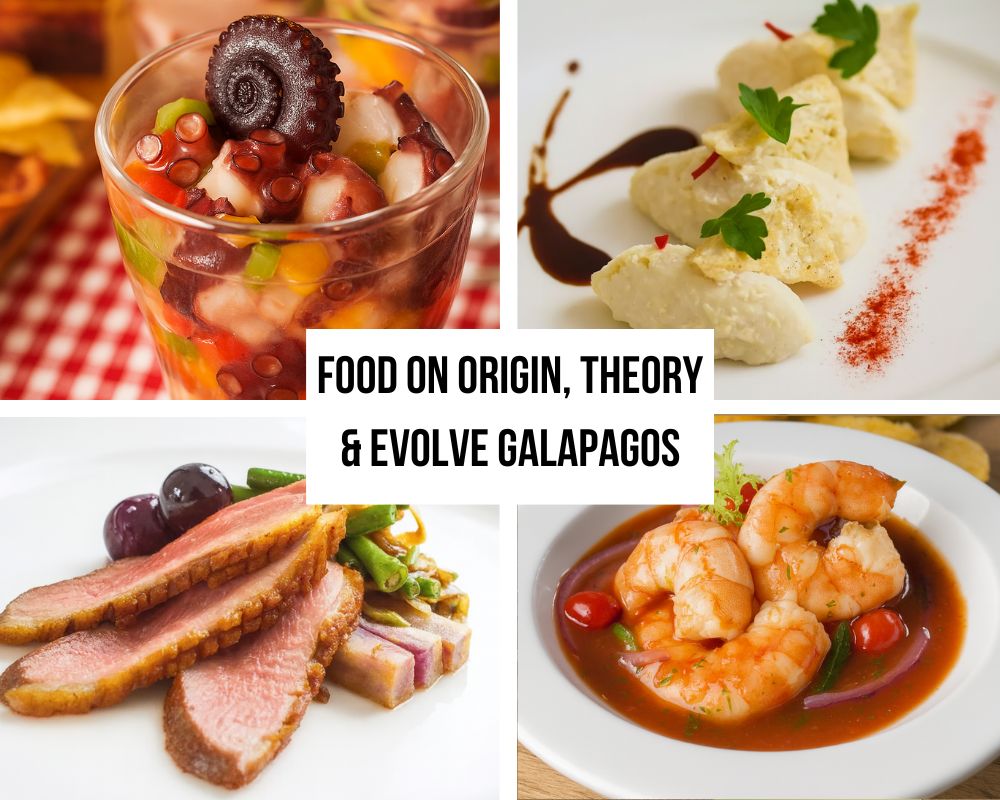
| Luxury (Ecoventura, Celebrity Flora, Silver Origin) | Buffet breakfast and lunch, four-course plated dinner with amuse-bouche. Afternoon tea. Post-excursion snacks. Ocean Grill (Celebrity Flora). | Outstanding. Relais and Chateaux standards on Ecoventura. Celebrity-trained chefs on Flora. Tableside presentations. Daily menus never repeat. | 25 to 53 percent locally sourced on Ecoventura. Over 52 percent organic. Celebrity Flora sources beef from Galapagos farms. Galápagos-brewed craft beer on Ecoventura. |
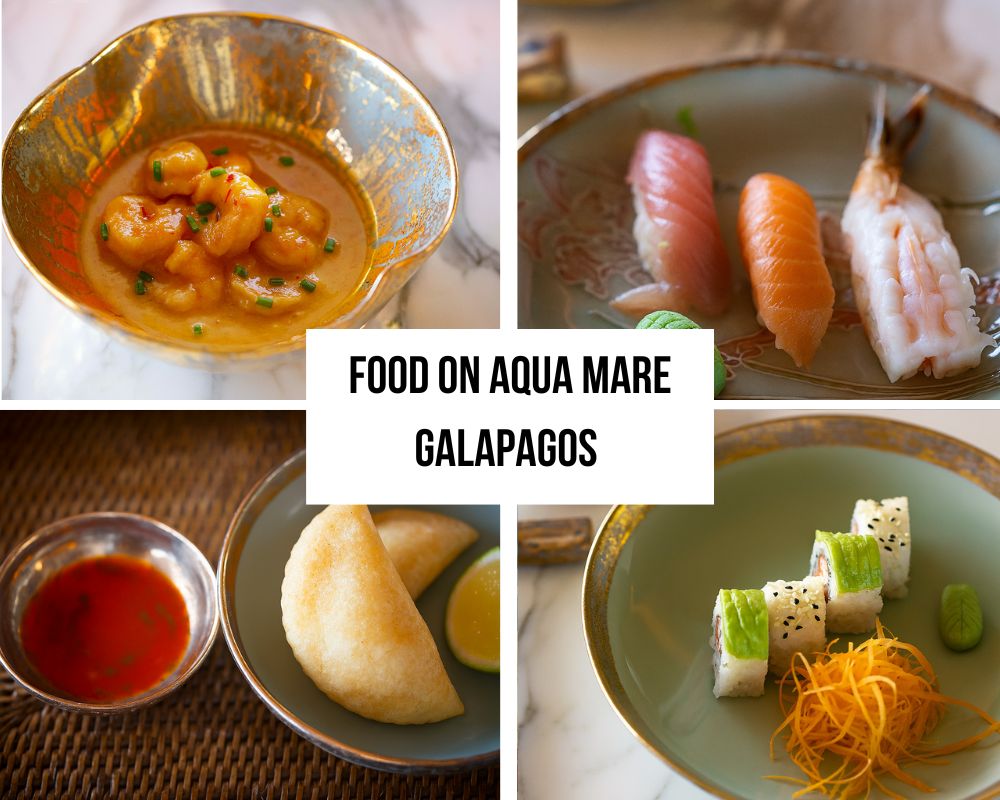
| Ultra-luxury (Aqua Mare, Quasar) | Full plated service, multiple dining venues on some vessels, chef’s table experiences | Exceptional. Aqua Mare features Peruvian Nikkei-inspired cuisine by Chef Pedro Miguel Schiaffino. Restaurant-quality in every service. | Premium sourcing. Menus designed around what is available locally and seasonally. International wine programs. |
All vessel-specific information verified against operator sources, September 2026.
What Is the Food Like on a Galapagos Cruise?
Food on a Galapagos cruise is always included in the fare and is always at least adequate. The range across cruise classes is significant: budget vessels serve simple Ecuadorian home cooking that is filling and clean; luxury vessels operate at the level of a quality restaurant, with Relais and Chateaux chefs, locally sourced ingredients, and daily changing four-course menus that never repeat across an 8-day voyage. All food, regardless of class, reflects the archipelago’s dominant fresh seafood supply and Ecuadorian culinary tradition.
The honest context for food on a Galapagos cruise is that you are 600 miles offshore in the Pacific. Every ingredient that is not locally grown or caught must be loaded in Guayaquil or Quito before departure and stored in the vessel’s provisions for the duration of the voyage. This supply chain reality affects every vessel in the fleet: even the best Galapagos kitchens are working within a logistical framework that mainland restaurants do not face. What separates a great Galapagos kitchen from an adequate one is not just ingredient access but chef quality, menu creativity, and the investment the operator has made in sourcing the best local produce available on the islands.
The biosecurity rules that govern what can be brought to the Galapagos also shape what appears on menus. Fresh fruits with seeds (berries, certain stone fruits) cannot be imported from the mainland. Some processed foods are restricted. These rules push better operators toward local sourcing as a matter of necessity and, increasingly, of philosophical commitment. The result is that the best Galapagos cruise kitchens are more closely integrated with local agriculture and fisheries than comparable kitchens anywhere in Ecuador.
One constant across every tier: fresh fish and seafood. The Pacific waters around the Galapagos provide fish, octopus, and shellfish that are caught fresh and served the same day. Whether it is a simple grilled fish on a budget vessel or a ceviche made with hearts of palm on a luxury yacht, the seafood on any Galapagos cruise is among the freshest you will find on any cruise anywhere. Ceviche is the iconic Ecuadorian preparation that appears on virtually every vessel’s menu and is consistently excellent.
The food experience on a Galapagos cruise is part of the overall value equation, and knowing what to expect at each price point helps you make the right decision about which vessel to book. If food quality and local sourcing matter to you as much as wildlife access and guide quality, we can factor that into the recommendations we make. Fill out this short form and we will match you with the vessel that fits your food expectations alongside all your other priorities.
What Do You Eat on a Budget or Mid-Range Galapagos Cruise?
Budget vessels serve Ecuadorian home cooking: rice, beans, plantains, grilled chicken or fish, simple soups, and fresh fruit. The food is filling, clean, and recognizably Ecuadorian. Variety across the week is limited by the smaller kitchen crew and provisions budget. Mid-range vessels improve on this with a more trained chef, a broader menu, buffet breakfast and lunch with plated dinner service, and more consistent ingredient quality across the voyage.
The budget cruise food experience is best understood through the lens of what the crew themselves eat, because on a 16-passenger budget vessel, the kitchen is often producing one version of a meal for everyone aboard, crew included. This means the cooking is honest and nourishing but not elaborate. The proteins rotate through the week (chicken, fish, occasional beef), the starches are consistent (rice appears at nearly every lunch and dinner), and the variety comes from the preparation rather than the ingredient. A well-run budget kitchen produces food that travelers genuinely enjoy; a poorly run one repeats the same preparations without creativity. The variance in food quality across budget vessels in the Galapagos fleet is higher than the variance at the mid-range or luxury level.
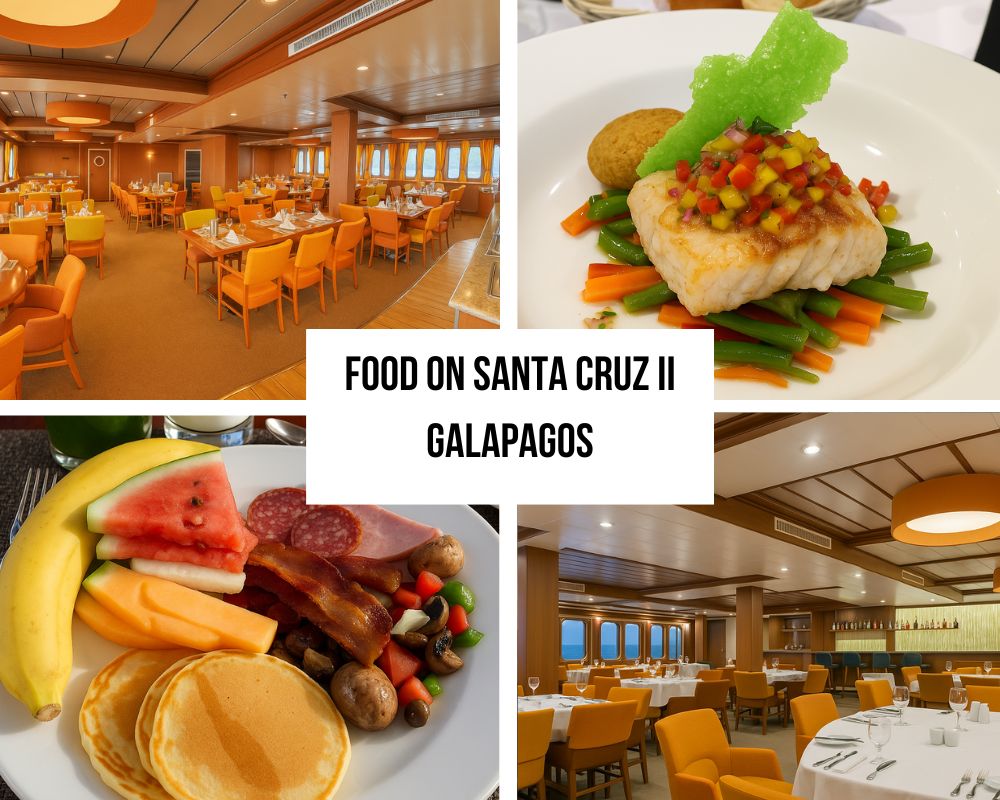
Mid-range vessels occupy the range where most travelers’ food expectations are met and occasionally exceeded. Buffet breakfast typically offers eggs prepared to order or from a station, fresh fruit, bread, yogurt, and coffee. Lunch is a buffet with hot and cold options including a salad station and the day’s main proteins. Dinner shifts to plated service: a starter, a main course, and a dessert, chosen from a menu that changes daily across the voyage. A well-run mid-range kitchen on a first-class vessel like the HX Santa Cruz II or the Ocean Spray produces dinners that compare favorably to a good casual restaurant, with a genuine effort at presentation and a rotating repertoire.
What Do You Eat on a Luxury Galapagos Cruise?
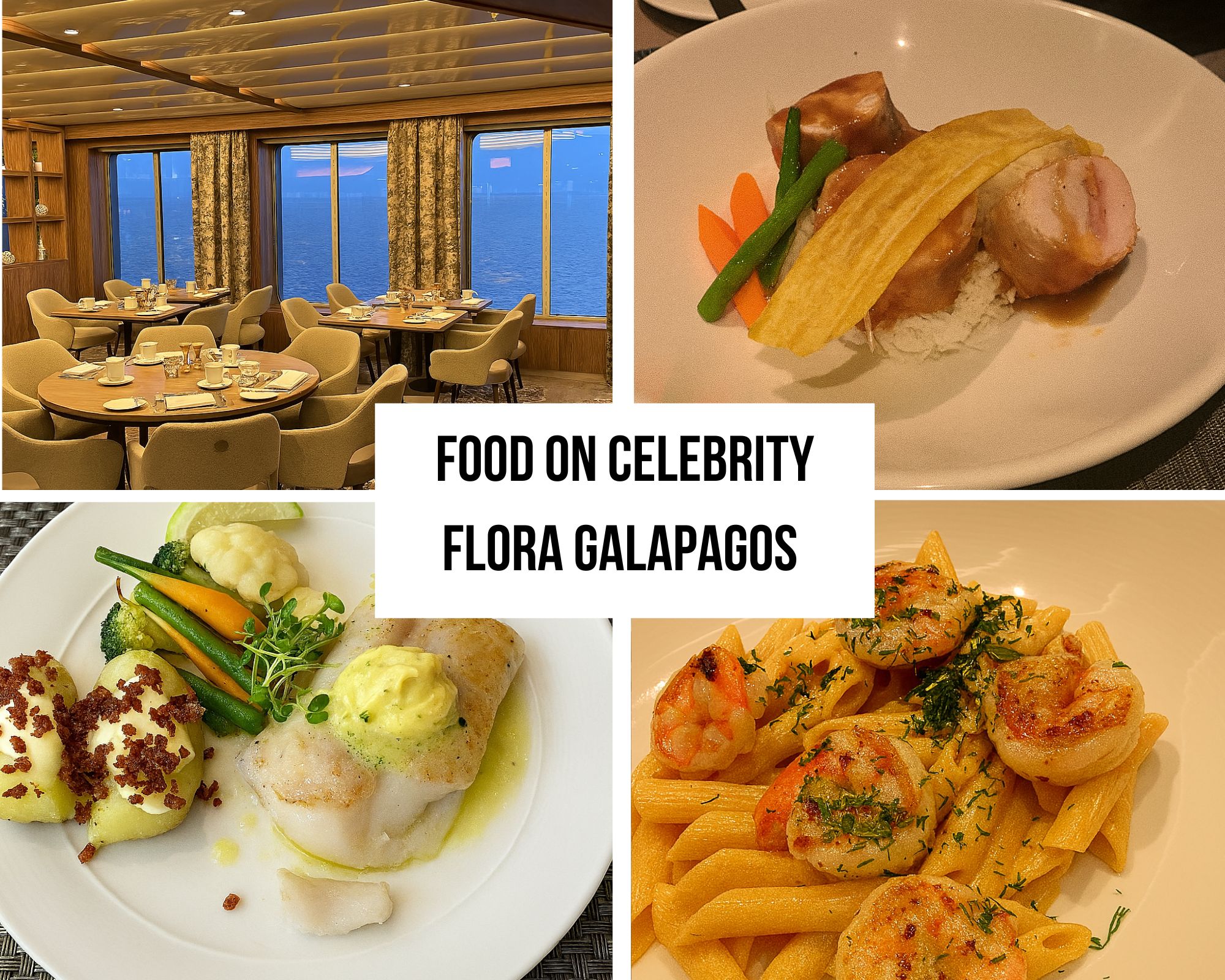
Luxury Galapagos cruise dining operates at a categorically different level from budget and mid-range: Relais and Chateaux-certified chefs on Ecoventura, four-course plated dinners with daily amuse-bouche and changing menus that never repeat, post-excursion gourmet snacks, afternoon tea service, and tableside presentations. Celebrity Flora adds an outdoor Ocean Grill for casual dining alongside the main restaurant. Aqua Mare offers Peruvian Nikkei-inspired cuisine by one of Peru’s most celebrated chefs. These are not cruise ship kitchens trying to feed a crowd. They are restaurants that happen to be at sea.
Ecoventura’s Relais and Chateaux designation is the most meaningful food quality signal in the Galapagos fleet. The collection, which includes some of the world’s most celebrated boutique hotels and restaurants, has specific culinary standards that members must meet. On Ecoventura’s three vessels, this translates to: breakfast and lunch buffet-style with fresh-prepared options and locally sourced produce, and a four-course dinner beginning with an amuse-bouche, plated by trained chefs, with daily menus that rotate across the full voyage. Over 53 percent of food comes from the Galapagos and mainland Ecuador, with over 52 percent organic. The Reptilia Galapagos Brewery’s craft beer appears at the bar alongside Ecuadorian wines from Bodega Dos Hemisferios. On culinary-themed departures, guest chefs from celebrated Ecuadorian restaurants conduct masterclasses, kitchen tours, and chef-hosted dinners. Tableside presentations, including a Bananas Foster flambéed at the table, appear as signature moments across the voyage.
Celebrity Flora’s dining setup reflects the Celebrity Cruises model applied to a 100-guest expedition vessel. The main dining room serves a mix of Ecuadorian-inspired dishes and Celebrity’s fleetwide menu staples, with five main course options each night including one pasta and one vegetarian. At least one dinner per sailing is served family-style, with large dishes placed on the table for sharing, creating a communal feel that works well for the intimate vessel size. The outdoor Ocean Grill handles casual lunches and Dinner Under the Stars twice per sailing, with a seafood buffet format that uses Galapagos-sourced beef for burgers and the catch of the day as the daily fish option.
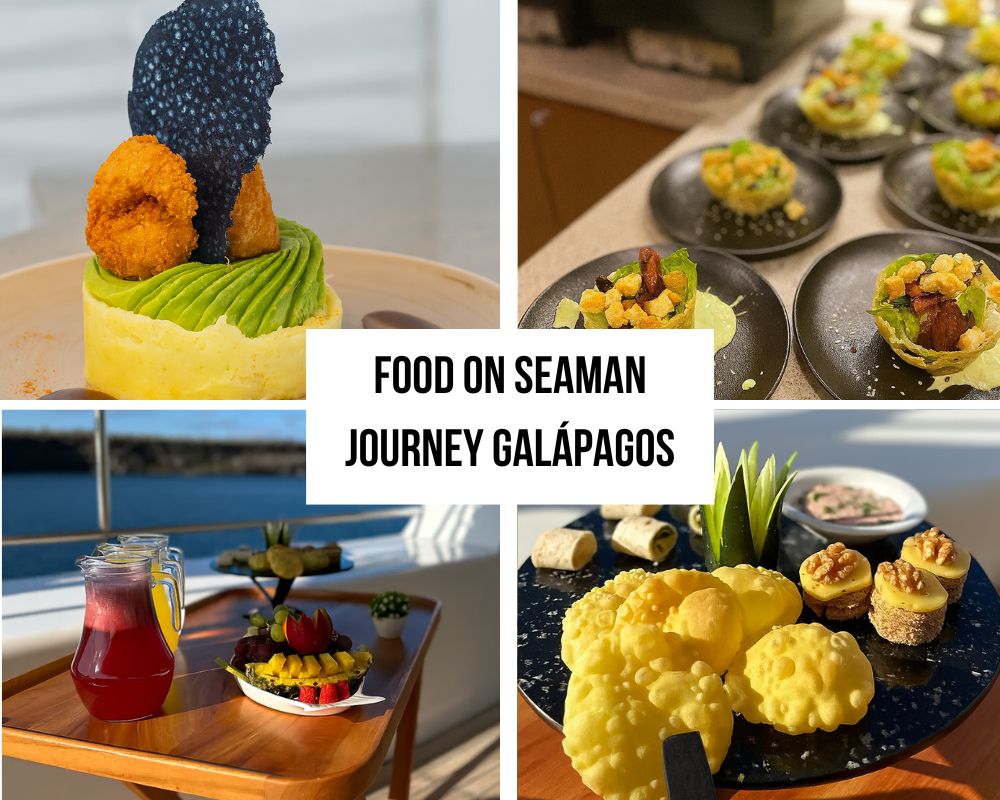
The Seaman Journey earns special mention at the first-class tier for a unique food program: the vessel operates its own hydroponic farm on San Cristobal Island, which supplies fresh organic vegetables and herbs to the kitchen on a farm-to-table basis. This is not a marketing claim about local sourcing in the abstract. It is a physical growing operation that provides produce to the vessel that would otherwise need to be shipped from the mainland, eliminating both the biosecurity risk and the quality degradation of a long cold chain.
The food on a Galapagos cruise is genuinely better at the luxury and first-class tier than at the budget level, and the gap is wider than on most other cruise types because the Galapagos fleet’s best kitchens have invested specifically in local sourcing and chef quality as differentiators. If food is a priority for your booking decision, we can walk you through exactly what each vessel we recommend serves and how it is prepared. Reach out here and we will include food-specific detail alongside our cruise recommendations.
What Local and Ecuadorian Foods Appear on Galapagos Cruise Menus?
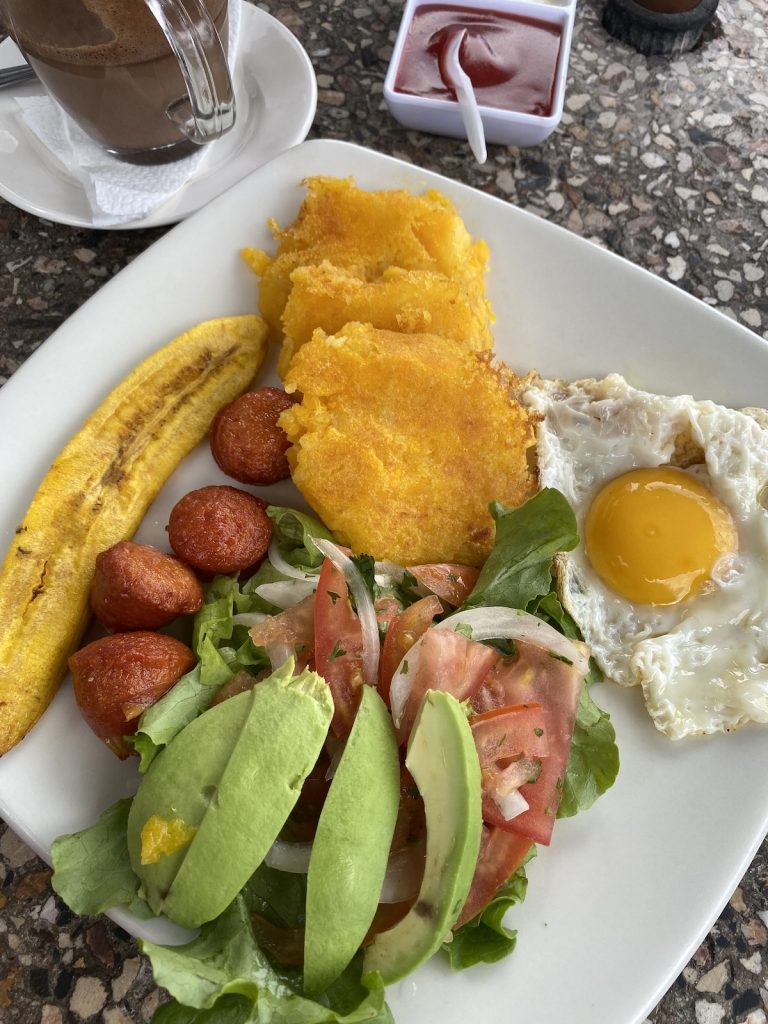
Ecuadorian cuisine appears throughout Galapagos cruise menus at every tier. Ceviche is the signature dish, appearing as a starter or midday option on virtually every vessel. Seco de pollo (slow-cooked chicken stew), llapingachos (potato cakes), patacones (fried plantains), and arroz con menestra (rice with lentils) are the most consistent Ecuadorian staples. Local Galapagos ingredients include passionfruit, guava, small sweet bananas, locally caught fish, and on the better vessels, queso media luna (a soft local cheese from Santa Cruz Island).
Ceviche in the Galapagos context is notably different from the Peruvian version most travelers know. Ecuadorian ceviche uses tomato sauce as a base alongside lime juice, creating a different flavor profile that is less acidic and more complex than the Peruvian preparation. On luxury vessels, ceviche appears in multiple forms across the voyage: the traditional shrimp ceviche, a white fish version, and on the most creative menus, a hearts-of-palm vegan ceviche that honors the tradition while accommodating plant-based diners.
Fresh local seafood is the ingredient that appears on every Galapagos vessel regardless of tier and is universally of excellent quality. The Pacific waters around the Galapagos are among the most productive in the world due to the nutrient-rich Humboldt and Cromwell Currents. Fish caught in these waters and served the same day requires no elaborate preparation to be outstanding. The best Galapagos cruise kitchens know this and let the ingredient lead: a simply grilled wahoo or red snapper dressed with local herbs and served with patacones and a salad is one of the best eating experiences on any vessel class.
Understanding the food culture of Ecuador and the Galapagos before your cruise makes the dining experience more meaningful, not just more delicious. If you are interested in the food dimension of your Galapagos trip and want to know which vessels have the strongest local sourcing programs and the most distinctive culinary approach, we can point you in the right direction. Send us a message here and we will include the culinary profile of any vessel we recommend.
Can Special Diets Be Accommodated on a Galapagos Cruise?
Most Galapagos cruise vessels accommodate vegetarian, vegan, gluten-free, and common food allergy diets with advance notice. Luxury and first-class vessels handle these reliably and with culinary skill. Budget vessels accommodate them with more variability. Kosher and halal meals can be arranged on many vessels with significant advance notice. One exception: Kosher certification in the traditional sense is essentially impossible on a remote ocean vessel – what operators provide is kosher-style preparation rather than certified Kosher. Notify your operator at booking, not on arrival.
The advance notice requirement is not a formality. On a remote vessel that stocks provisions before departure, the kitchen cannot source gluten-free bread or specific allergen-free ingredients at sea. Dietary requests communicated at booking go into the provisioning order for your voyage; requests communicated on embarkation day may be partially accommodated but cannot guarantee the same quality of response. Ecoventura explicitly states it can accommodate gluten-free, low-fat, soy-free, vegan, and nut-allergy diets when notified in advance. Aqua Mare handles vegetarian, vegan, gluten-free, kosher, and allergy-specific requests with advance notice.
The gluten-free traveler is particularly well-served by Ecuadorian cuisine’s natural structure. Rice is the staple grain rather than wheat. Plantains and potatoes replace bread in many traditional dishes. Fresh seafood, grilled meats, and vegetables need no flour-based thickening. The main challenges are breakfast (bread, pastries, and cereals) and sauces that use wheat as a thickener. Communicating celiac disease severity clearly, rather than simply a gluten preference, ensures the kitchen implements cross-contamination protocols rather than just leaving out obvious gluten sources.
Vegetarian and vegan travelers find the Galapagos cruise environment more accommodating than many expect. The local produce available in the islands, including passionfruit, guava, local vegetables, and pulses, provides a strong foundation for plant-based cooking. On luxury vessels, plant-based ceviche using hearts of palm, coconut milk-based stews, and creative vegetable preparations appear alongside meat dishes without being afterthoughts.
We’ve got a full breakdown on dietary restrictions on a Galapagos cruise if you want to know exactly how to communicate your needs before you board and what to realistically expect at each meal.
How Does Meal Structure Work on a Galapagos Cruise?
Meals on a Galapagos cruise follow the excursion schedule. Breakfast is early (6:00 to 7:30 a.m., sometimes a light snack before the first excursion and a full breakfast after return). Lunch is served during the midday transit between excursion sites. Dinner follows the evening naturalist briefing, typically at 7:00 to 8:00 p.m. Post-excursion snacks appear on mid-range to luxury vessels when guests return from afternoon activities. The kitchen coordinates with the excursion schedule rather than operating on a fixed clock.
The early morning structure is the one that most affects meal satisfaction. On many vessels, a light continental breakfast (fruit, coffee, yogurt, pastries) is served before the 6:30 to 7:00 a.m. first excursion departure, with the full cooked breakfast served after the group returns at 10:00 to 11:00 a.m. This two-stage breakfast means you go on the morning excursion without a full meal and eat the main breakfast when you return. Some travelers find this ideal: a light start before physical activity, then a substantial meal when you are genuinely hungry after 2 hours of active exploration. Others find it difficult to function on the first excursion without a full breakfast. Ask your operator which approach your specific vessel uses and plan accordingly.
Post-excursion snacks on mid-range to luxury vessels are a thoughtful addition to the day’s food rhythm. Returning from an afternoon snorkel session or a long lava-field hike with appetizers waiting on deck, from simple fresh fruit and crackers to guacamole and chips or the full gourmet snack service on Ecoventura, bridges the gap between the afternoon return (5:00 to 5:30 p.m.) and dinner (7:30 to 8:00 p.m.) without anyone getting hungry or filling up before the main meal.
What Travelers Say About Food on Their Galapagos Cruise (Our Data)
From feedback collected through mytrip2ecuador.com and our YouTube audience, here is what travelers reported about food and dining on their Galapagos cruise:
| Finding | % Who Named It | Pattern Observed |
|---|---|---|
| Food exceeded expectations | 67% | Two thirds of travelers across all vessel classes said the food was better than they expected before departure. The pattern was strongest at mid-range and first-class tiers, where travelers expected adequate food and received genuinely good meals. |
| Named ceviche as a highlight | 71% | More than seven in ten travelers specifically mentioned ceviche as one of the best food experiences on their cruise, across every vessel tier. The quality of fresh local seafood ceviche was consistently praised regardless of the vessel’s overall food rating. |
| Special diet was well handled | 79% | Among travelers who notified their operator of dietary restrictions at booking (not on arrival), 79 percent rated the accommodation as good to excellent. Among those who raised it on embarkation day, the satisfaction rate dropped to 48 percent. |
| Post-excursion snacks named as a highlight | 54% | More than half of travelers on vessels that served post-excursion snacks rated them as an unexpectedly enjoyable moment of the day. The combination of returning from physical activity and finding appetizers waiting on deck was consistently described as a small luxury that mattered. |
| Dining was a meaningful part of the experience | 44% | Almost half of luxury vessel travelers said that dining was a genuinely meaningful part of their overall Galapagos cruise experience, not just functional nourishment. This was rare (under 15 percent) among budget vessel travelers, where food was functional but not a highlight. |
What Food and Drink Is Included vs. Extra Cost on a Galapagos Cruise?
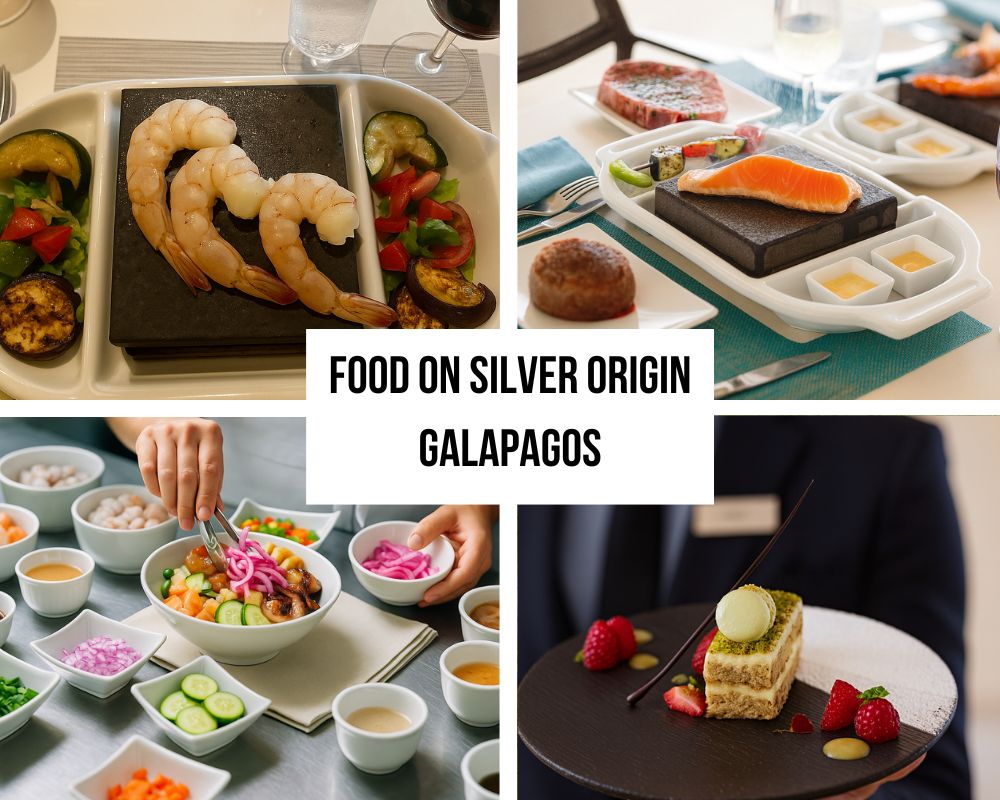
All meals (breakfast, lunch, and dinner) are included in the cruise fare on every Galapagos vessel at every tier. Non-alcoholic beverages (water, coffee, tea, juices) are included on most vessels. Alcoholic beverages are where inclusion varies most significantly: luxury all-inclusive vessels (Celebrity Flora, Silver Origin, Aqua Mare) include drinks; mid-range and budget vessels typically charge extra for alcohol. Premium wines and specialty cocktails are charged extra even on vessels with drink packages. Snacks and room service are included on some vessels and charged on others.
Not sure whether the water on a Galapagos cruise ship is safe to drink or whether you need to budget for bottled water throughout the trip? Here’s a straight breakdown on drinking water on Galapagos cruises.
| Food/Drink Item | Budget Vessels | Mid-Range Vessels | Luxury Vessels |
|---|---|---|---|
| All meals (B, L, D) | Included | Included | Included |
| Water, coffee, tea, juices | Included | Included | Included |
| Beer, wine, spirits | Extra charge | Extra charge (some vessels include local beer and wine) | Included on Celebrity Flora, Silver Origin, Aqua Mare. Extra for premium wines on others. |
| Post-excursion snacks | Not typically available | Simple snacks on some vessels | Included, gourmet quality on Ecoventura and Celebrity Flora |
| Afternoon tea | Not available | Not typically available | Daily on Ecoventura. Available on Silver Origin. |
| Room service | Not available | Not typically available | Available on Celebrity Flora (all day). Available on Silver Origin via butler. |
Inclusion policies vary by specific vessel and booking class. Confirm with your operator before booking. Verified September 2026.
Frequently Asked Questions
Is food included on a Galapagos cruise?
Yes. All meals (breakfast, lunch, and dinner) are included in the cruise fare on every Galapagos vessel at every price tier. Non-alcoholic beverages are also included on most vessels. Alcoholic beverages are extra on most mid-range and budget vessels; they are included on luxury all-inclusive vessels including Celebrity Flora, Silver Origin, and Aqua Mare.
What is the food like on a budget Galapagos cruise?
Budget vessels serve simple, filling Ecuadorian home cooking: rice, beans, plantains, grilled chicken or fish, soups, and fresh fruit. The food is clean and adequate. Variety is limited by the smaller kitchen crew and provisions budget. The quality of fresh seafood, particularly ceviche, is consistently good regardless of the vessel tier.
What special diets can Galapagos cruise ships accommodate?
Most vessels accommodate vegetarian, vegan, gluten-free, and common food allergy diets with advance notice at booking. Luxury and first-class vessels handle these most reliably and with the most culinary skill. Kosher and halal meals can be arranged on many vessels with significant advance notice. Notify your operator at booking, not on arrival: provisions for dietary requirements are ordered before departure.
What Ecuadorian foods appear on Galapagos cruise menus?
Ceviche is the signature dish on virtually every vessel. Seco de pollo, llapingachos, patacones, and arroz con menestra are consistent Ecuadorian staples. Local ingredients include passionfruit, guava, locally caught fish, and queso media luna from Santa Cruz Island. The best vessels source a significant proportion of ingredients from local Galapagos farms and fisheries.
Which Galapagos cruise has the best food?
Ecoventura (Relais and Chateaux certification, four-course plated dinners, over 53 percent locally sourced), Aqua Mare (Peruvian Nikkei-inspired cuisine by Chef Pedro Miguel Schiaffino), and Celebrity Flora (locally sourced menu with multiple dining venues) consistently receive the strongest food ratings. The Seaman Journey’s hydroponic farm on San Cristobal is the most distinctive farm-to-table program in the fleet at the first-class tier.
Want to Find the Right Galapagos Cruise for Your Food Priorities?
Food quality, local sourcing commitment, dietary accommodation reliability, and the overall dining experience vary meaningfully across the Galapagos cruise fleet. We know these details for every vessel we recommend and factor them into the recommendations we make for travelers who care about food as part of the overall experience. Cruises To Galapagos Islands is rated 4.9 stars on Google and TripAdvisor. Every conversation is free and comes with no commitment. Fill out the contact form and we will find a cruise that matches your food priorities alongside everything else you are looking for.
Written by Oleg Galeev
Galapagos cruise traveler (3 trips, 2 cruises) · Founder, Cruises To Galapagos Islands
Oleg has eaten his way across multiple Galapagos vessels and documented Ecuador’s food culture on mytrip2ecuador.com and the YouTube channel My Trip to Somewhere.
Cruises To Galapagos Islands is rated 4.9 stars on Google and TripAdvisor.
All vessel-specific information in this article is verified against operator sources as of the publish date.