
Evolution Galapagos Cruise Review
TL;DR
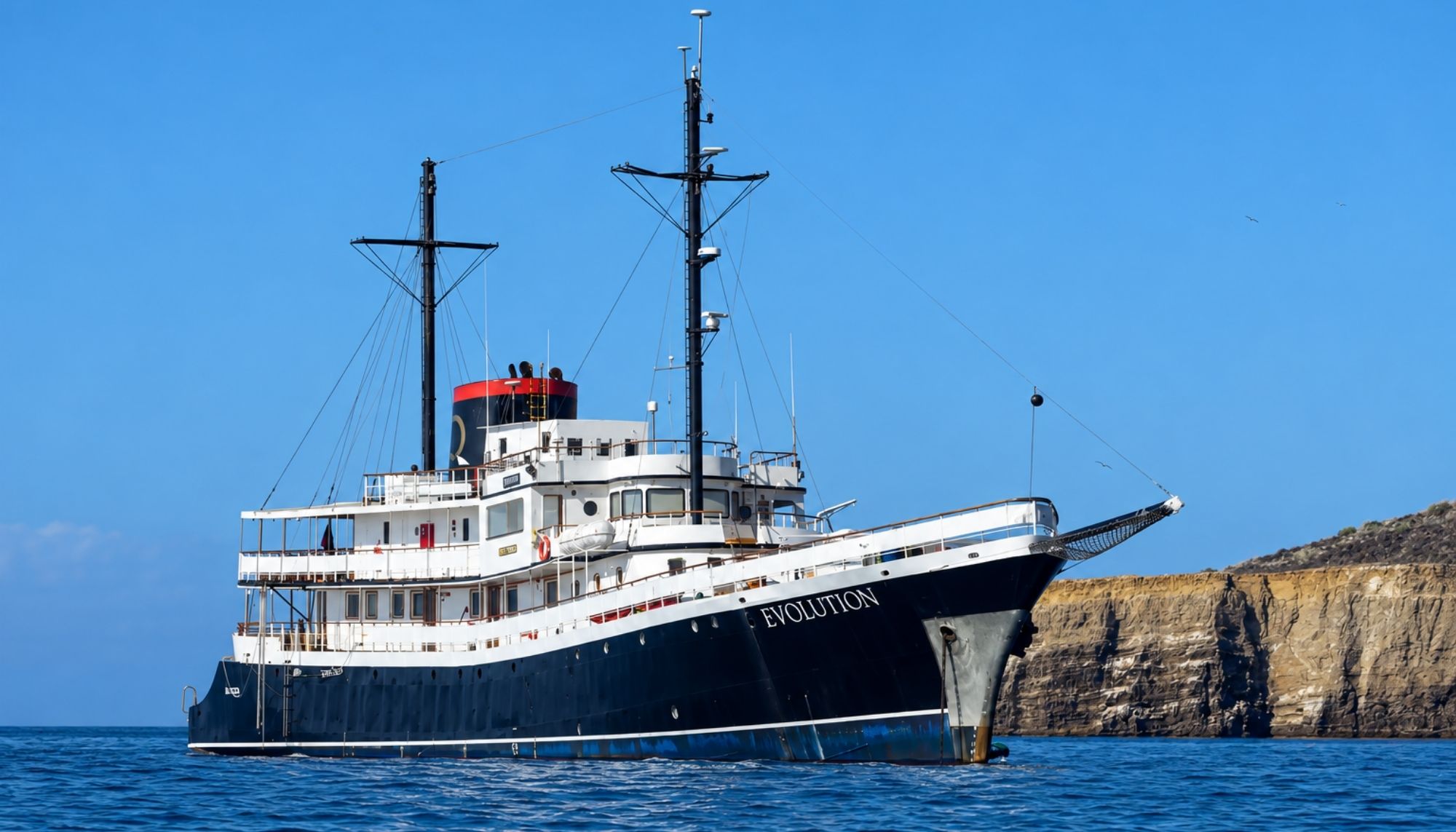
The Evolution is a 192-foot, 32-passenger luxury motor yacht run by Quasar Expeditions – the most experienced family-owned Galapagos operator, in the archipelago since 1986. It holds nine consecutive Travel + Leisure World’s Best wins, carries an onboard doctor, and is the maximum-permitted size to land all passengers together at every National Park site. Prices start at $9,950 per person for 8 days, park fees and open bar included. Avoid cabins C1 and C9 – anchor noise is real and documented.
Evolution Galapagos Cruise: Quick Facts
| Detail | Info |
|---|---|
| Vessel type | Motor yacht |
| Class | Luxury |
| Dimensions | 192 ft (58.5 m) length / 29 ft (8.9 m) beam |
| Capacity | 32 passengers |
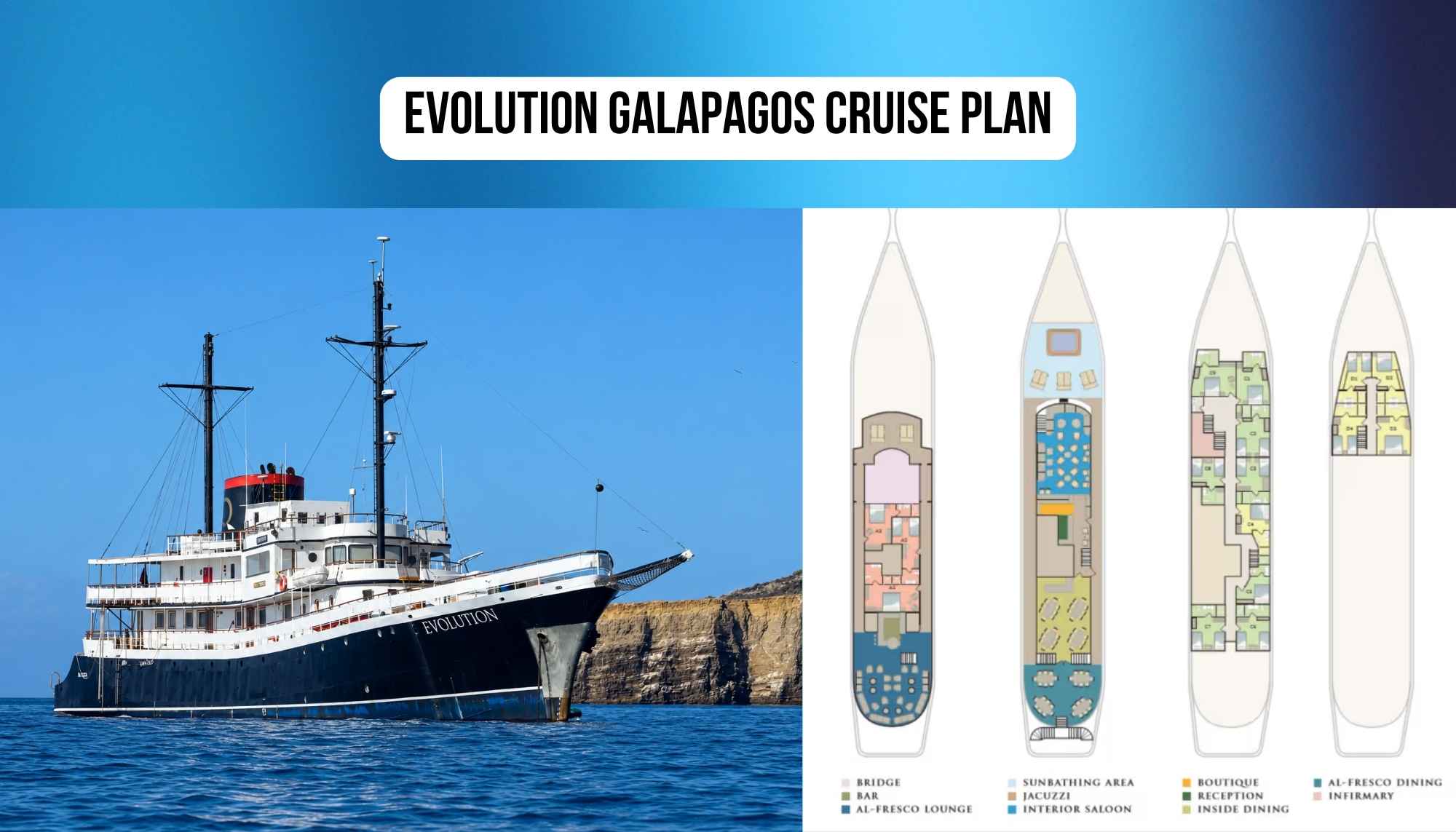
| Cabins | 16 ocean-facing cabins: 3 Albatross suites (A-deck, windows), 9 Cormorant premium staterooms (C-deck, portholes), 4 Darwin deluxe staterooms (D-deck, portholes). Bed configs: King, Queen, Twin, or convertible Twin/King by cabin. |
| Last renovation | 2017 |
| Operator | Quasar Expeditions (family-owned, Ecuadorian, est. 1986) |
| Crew | 21, including 1 onboard doctor, 1 cruise director, multiple naturalist guides |
| Guest-to-guide ratio | 10:1 |
| Doctor onboard | Yes, with full infirmary. The only vessel this size in the Galapagos to carry one. |
| Itinerary lengths | 8 days / 7 nights (two alternating routes) or 15 days / 14 nights (back-to-back) |
| Departures | Every Saturday, year-round |
| Price range (2026) | From $9,950 pp (Deluxe, 8 days) to $11,950 pp (Master Suite, 8 days). Includes park fee, transit card, open bar, Wi-Fi, wetsuits, kayaks, all meals and transfers. Prices verified September 20, 2026. |
| Not included | International flights, Galapagos domestic flights (~$473-$530 USD round-trip), premium wines/spirits, gratuities, laundry, trip insurance |
| Awards | Travel + Leisure #1 Intimate-Ship Cruise Line 2026 (9 consecutive years); Condé Nast Traveler Best Expedition Cruise Line 2024; USA Today 10Best Family Cruise 2025 |
What Is the Evolution and Who Is This Cruise Actually Built For?
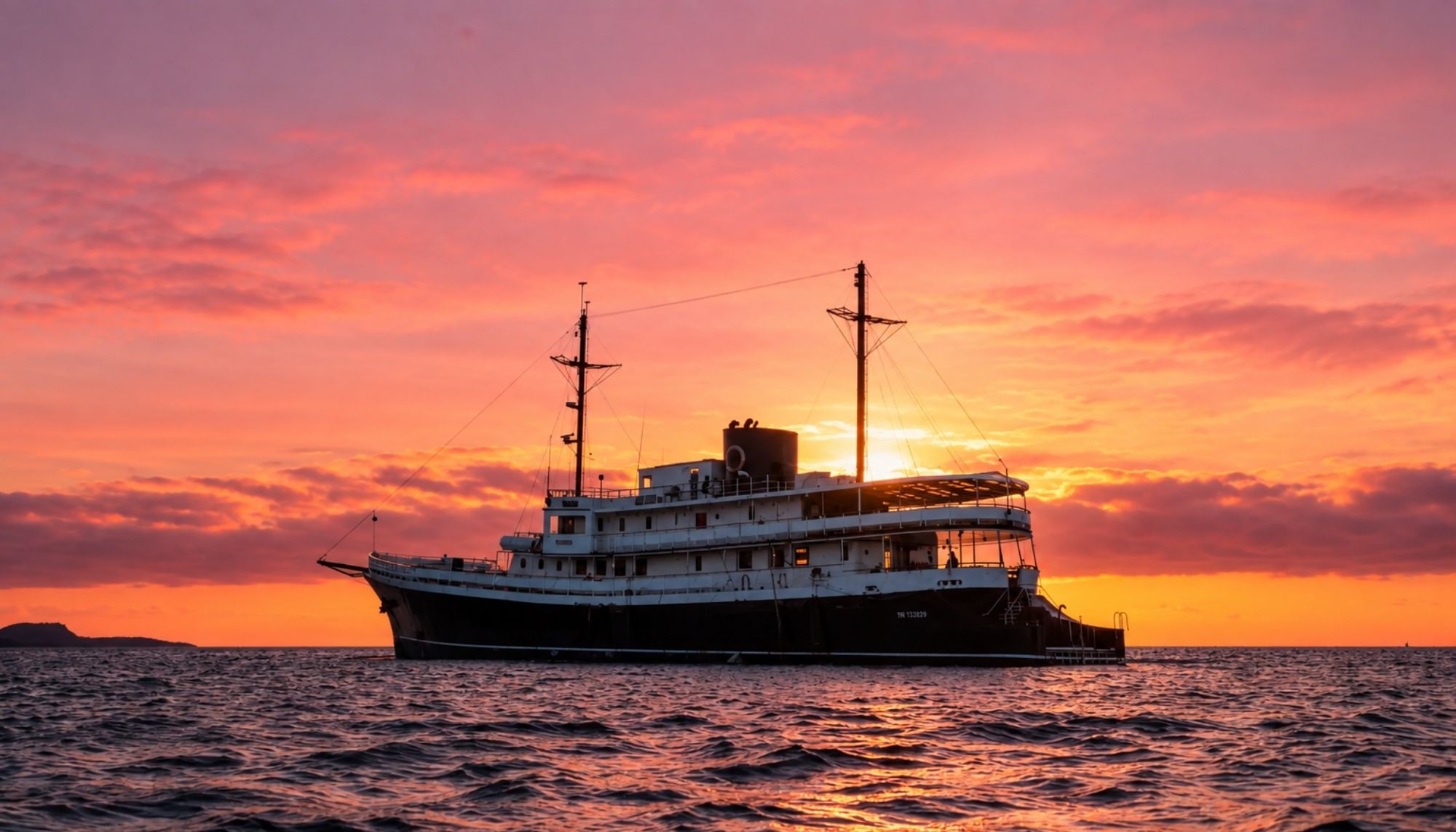
The Evolution is a 192-foot, 32-passenger luxury motor yacht operated by Quasar Expeditions, a family-owned Ecuadorian company running Galapagos cruises since 1986. At 32 passengers, it sits exactly at the Galapagos National Park’s site cap – meaning your full group lands together at every visitor site, with no subgroup rotations. Prices start at $9,950 per person for 8 days, park fees included. Nine consecutive Travel + Leisure World’s Best Awards, most recently #1 Intimate-Ship Cruise Line for 2026.
The 32-passenger ceiling is not incidental. The National Park caps simultaneous visitors at sensitive sites, and 32 is exactly that number. Larger vessels must rotate groups through. On the Evolution, there’s no waiting on deck while the other half takes their turn. You’re all ashore, at the same time, with the same guide. That structural advantage compounds across every excursion day.
The second structural advantage is the 10:1 guest-to-guide ratio. Multiple naturalist guides deploy simultaneously on excursions, so no more than roughly 10 guests share a guide at any one time. At that number, a guide can notice the person who keeps stopping to photograph something, manage pace for the couple with bad knees on lava rock, and still deliver a two-minute account of exactly why the flightless cormorant’s wings stopped working. At 16 passengers per guide – the ratio on many competing vessels – that attentiveness gets stretched.
Who is this cruise for: wildlife-serious travelers who want genuine luxury without the large-ship trade-offs. Families where an onboard doctor matters. Couples on a milestone trip. Photographers who want both guide access and deck space. Travelers who’ve been to other remote destinations and know the difference between a well-run expedition and a managed tour.
Who it is not for: anyone primarily looking for spa amenities or expecting a resort experience at sea. There is a jacuzzi. There is no spa. This yacht is built around the islands. Planning a trip at this price point is genuinely complicated – itinerary timing, cabin category, 8 days versus 15. Reach out here and we’ll walk you through it, free and without pressure.
What Are the Cabins and Onboard Spaces Like on the Evolution?
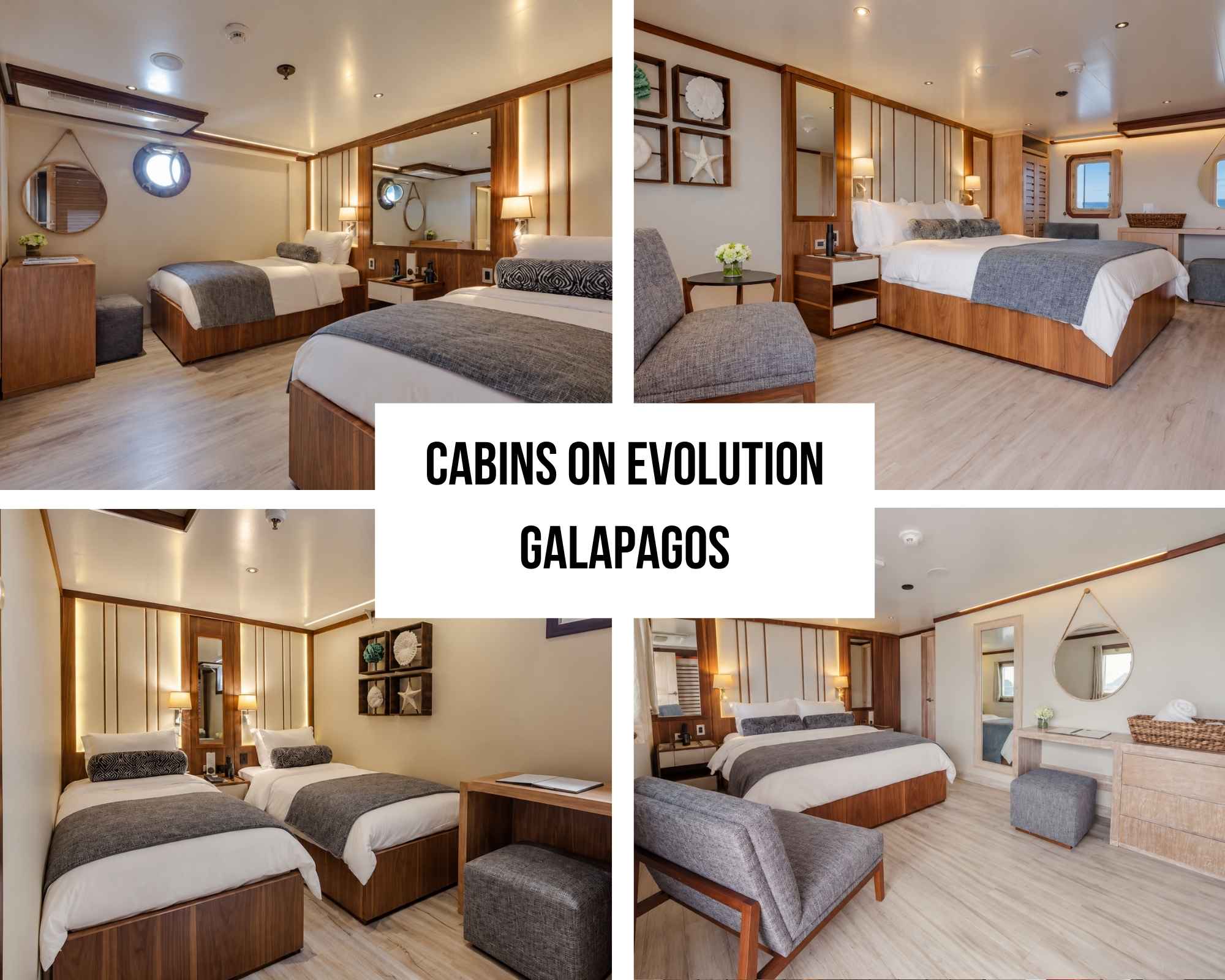
Sixteen ocean-facing cabins across three deck categories. The Master Suite (A1, Albatross deck) runs 263 square feet with a king bed and ocean-view windows – the only cabin on the vessel with that window profile. Cormorant premium staterooms on C-deck range from 140 to 198 square feet with ocean-view portholes; most offer queen or convertible twin/king beds. Darwin deluxe staterooms on D-deck are 161 to 200 square feet with twin, queen, or king configurations. Every cabin has a private bathroom, individual A/C, safe, storage, and daily housekeeping.
The differences between decks matter more than the square footage chart suggests. A-deck suites get ocean-view windows and the best morning light, but also the most motion on overnight passages. C and D-deck cabins sit closer to the vessel’s center of gravity – more stability, smaller portlights, better sleep on rough nights. Travelers prone to seasickness should request the lower decks without hesitation.
One thing Quasar doesn’t advertise but every informed traveler should know: cabins C1 and C9 sit directly above the anchor chain mechanism. When the captain anchors overnight, that chain is loud – documented across multiple independent reviews, with at least one reviewer confirming a white noise machine couldn’t block it. Light sleepers should request any other C-deck or D-deck cabin when booking. It is the single most actionable cabin tip for this vessel.
The social spaces are where 32 passengers stops feeling like a crowd. The al-fresco bar on the Albatross deck is the consistent gathering point: afternoon drinks after excursions, sunset watching, the conversations that turn a group of strangers into travel companions by day three. A 360-degree walkaround deck means there’s almost always somewhere with a clear sightline when something surfaces in the water. The interior lounge handles evening briefings. The jacuzzi sits forward at the bow.
Which Itineraries Does the Evolution Sail and What Will You See?
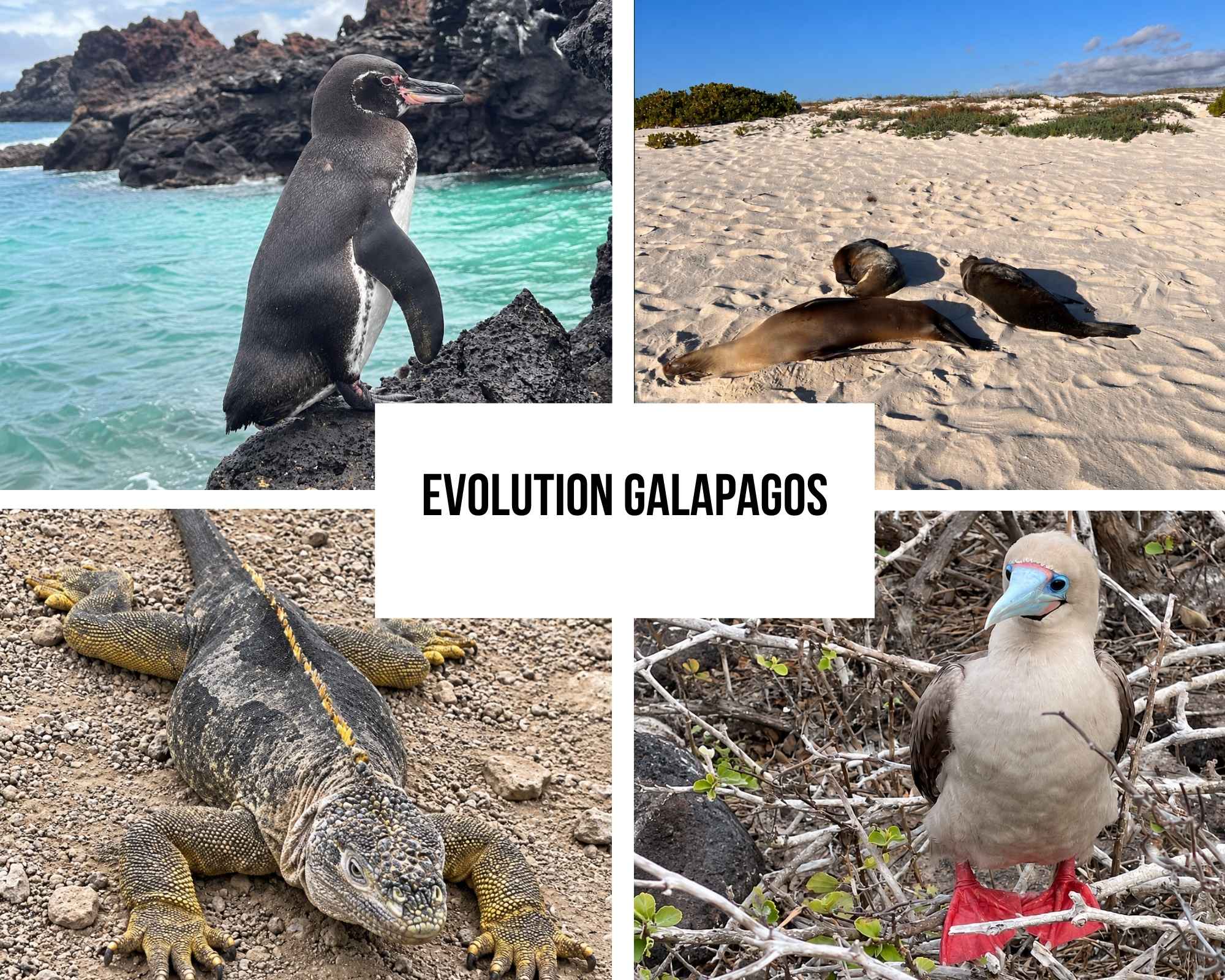
Three itineraries: “In the Steps of Pirates and Darwin” (8 days, Baltra departure), “Footsteps Back in Time” (8 days, San Cristobal departure), and “Darwin’s Legacy” (15 days, combining both). The two 8-day routes cover different islands and different flagship wildlife – neither is better, they’re complementary. The 15-day back-to-back is the most complete Galapagos expedition on any vessel, reaching remote western sites that most shorter cruises skip.
| Itinerary | Key Sites | Signature Wildlife | 2026 Price From (pp) |
|---|---|---|---|
| In the Steps of Pirates & Darwin (8 days, Baltra) | Isabela (Punta Vicente Roca), Fernandina, Bartolome, Santiago, Española (Punta Suarez, Gardner Bay), Kicker Rock | Flightless cormorants, penguins, waved albatross (Española), hammerheads at Kicker Rock | $9,950 |
| Footsteps Back in Time (8 days, San Cristobal) | South Plazas, Santa Fe, Chinese Hat, Santiago (Puerto Egas), Genovesa (Darwin Bay, Prince Philip’s Steps), Floreana (Post Office Bay, Devil’s Crown) | Red-footed boobies, frigatebirds, swallow-tailed gulls, sharks at Devil’s Crown, flamingos | $9,950 |
| Darwin’s Legacy (15 days) | All sites from both 8-day routes | Full archipelago – highest chance of rare species including western endemics | $18,900 |
The Genovesa access point is one the Evolution’s competitors often miss. Genovesa sits in the far north – the crossing is long, and many operators skip it to save fuel costs. The Evolution goes. That’s where you find red-footed boobies, short-eared owls, and frigatebird colonies in densities that reorganize a birder’s priority list on sight. Travelers who considered the National Geographic vessel before booking the Evolution will sometimes note it couldn’t access Genovesa at all – size restriction. The Evolution can, and does, on the “Footsteps Back in Time” itinerary.
All departures are Saturday-to-Saturday on a fixed calendar. The schedule doesn’t flex – that’s the trade-off for the operational consistency Quasar maintains across 40 years. Unsure which route suits your wildlife priorities? Send us a quick message – we’ll map it to what you’re most hoping to see.
How Is the Food, Crew, and Day-to-Day Experience?
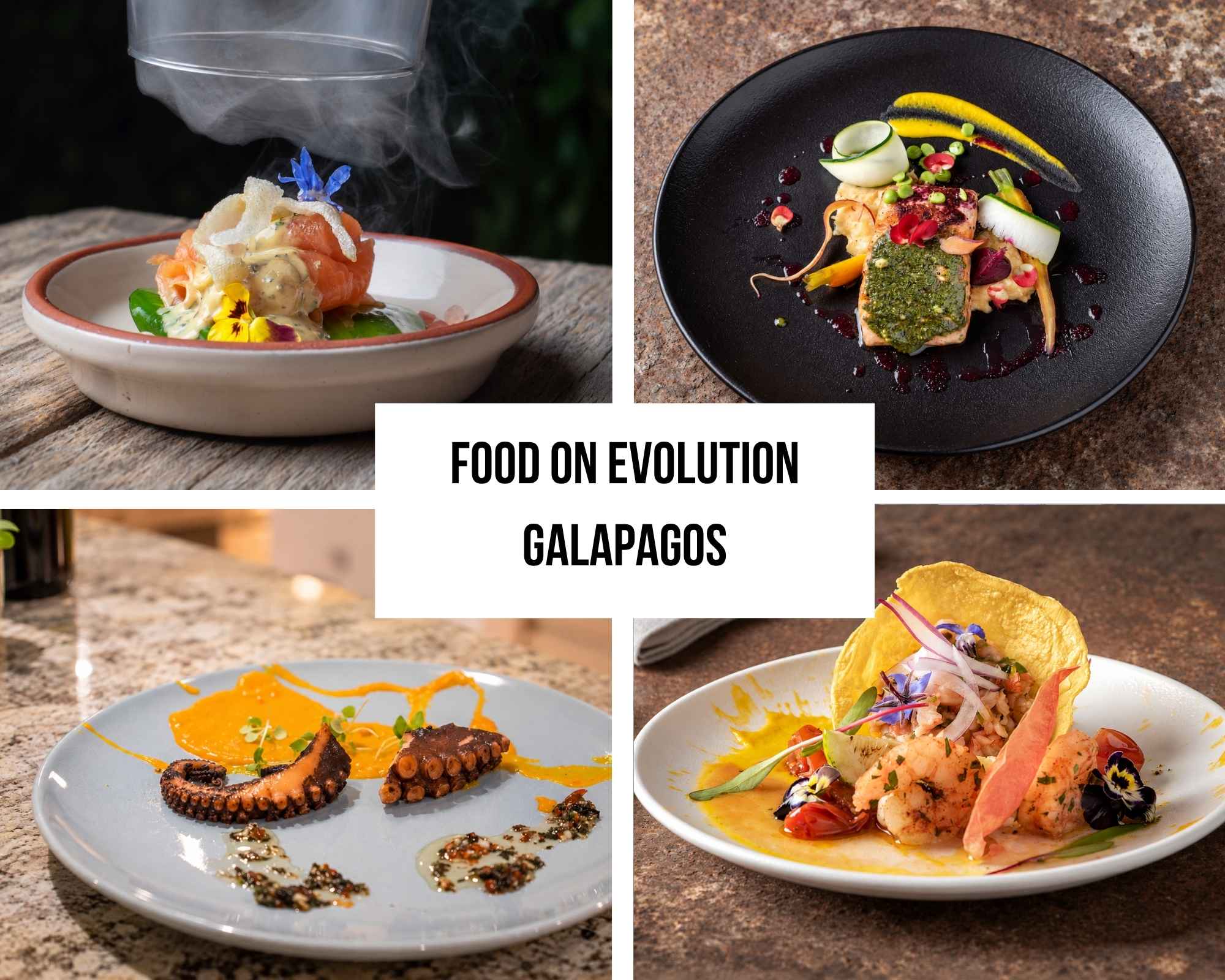
Three daily meals prepared by professional chefs using Ecuadorian ingredients and produce sourced from local farmers, plus afternoon appetizers at the al-fresco bar. Open bar policy covers local beers, wines, cocktails, spirits, soft drinks, juice, coffee, and water throughout the cruise – premium brand wines and spirits excluded. The crew numbers 21 for 32 guests, and independent reviewers across multiple years describe a service standard that feels closer to a well-run private yacht than a scheduled departure.
The open bar matters more than it sounds at first. On comparable-tier vessels, alcohol is billed separately or capped by category. Here, your running tab covers essentially everything drinkable except premium-label bottles, settled on the final day. Nobody calculates what they’re drinking on a $10,000+ expedition. That friction doesn’t exist.
The daily rhythm runs like this: early breakfast around 6:30-7:00 a.m. before the morning excursion, return to the yacht for full lunch, rest while the vessel repositions, afternoon excursion, showers and the al-fresco bar hour, dinner, evening briefing about tomorrow. Two excursions every day without exception. By day three it feels natural – the structure earns its keep. Starlink Wi-Fi is included in interior social areas but not in cabins. It works for messaging and email, not reliably for video calls. Quasar is honest about this in their pre-departure materials.
How Does the Evolution Compare to Similar Vessels?
At the luxury tier, the Evolution’s main competitors are the Ecoventura Origin/Theory/Evolve trio (20 passengers, Relais & Châteaux, newer builds), Quasar’s own Grace (16 passengers, more intimate, no doctor), and Silversea’s Silver Origin (100 passengers, ultra-luxury ship scale). The Evolution is the only vessel of these four that combines a 32-passenger size limit with full single-group site access, an onboard doctor, 8 or 15-day itinerary options, and 40 years of operator institutional knowledge in the archipelago.
| Vessel | Passengers | Doctor | Guide Ratio | Best For | Trade-off vs. Evolution |
|---|---|---|---|---|---|
| Evolution (Quasar) | 32 | Yes | 10:1 | Most complete expedition at luxury tier; 8 or 15-day options; 40-year operator track record | 2017 renovation vintage; C1/C9 anchor noise |
| Origin / Theory / Evolve (Ecoventura) | 20 | No | 10:1 | Relais & Châteaux brand; purpose-built newer vessels; most intimate onboard feel | 7-night only; no 15-day option; no onboard doctor |
| Grace (Quasar) | 16 | No | ~8:1 | Most intimate luxury experience; historic vessel; highest guide ratio | More sea motion; no doctor; higher per-cabin premium |
| Silver Origin (Silversea) | 100 | Yes | Higher volume | Full ship-level amenities, butler service, largest cabins | Must split into subgroups at Park site cap locations |
The Ecoventura comparison is the one that comes up most at this price point. Their Origin, Theory, and Evolve are purpose-built new vessels with the Relais & Châteaux affiliation – a real signal of hospitality caliber. What they don’t offer is the 15-day option, the onboard doctor, or Quasar’s 40-year permit portfolio in the archipelago. Neither is categorically better. A traveler prioritizing the newest hardware and the Relais & Châteaux brand: Ecoventura. A traveler prioritizing itinerary depth, the doctor, and the longest operator track record: Evolution. We’ve been on both. Fill out this short form and we’ll give you an honest read on which fits your specific priorities.
What Do Real Travelers Say? (The Good and the Honest)
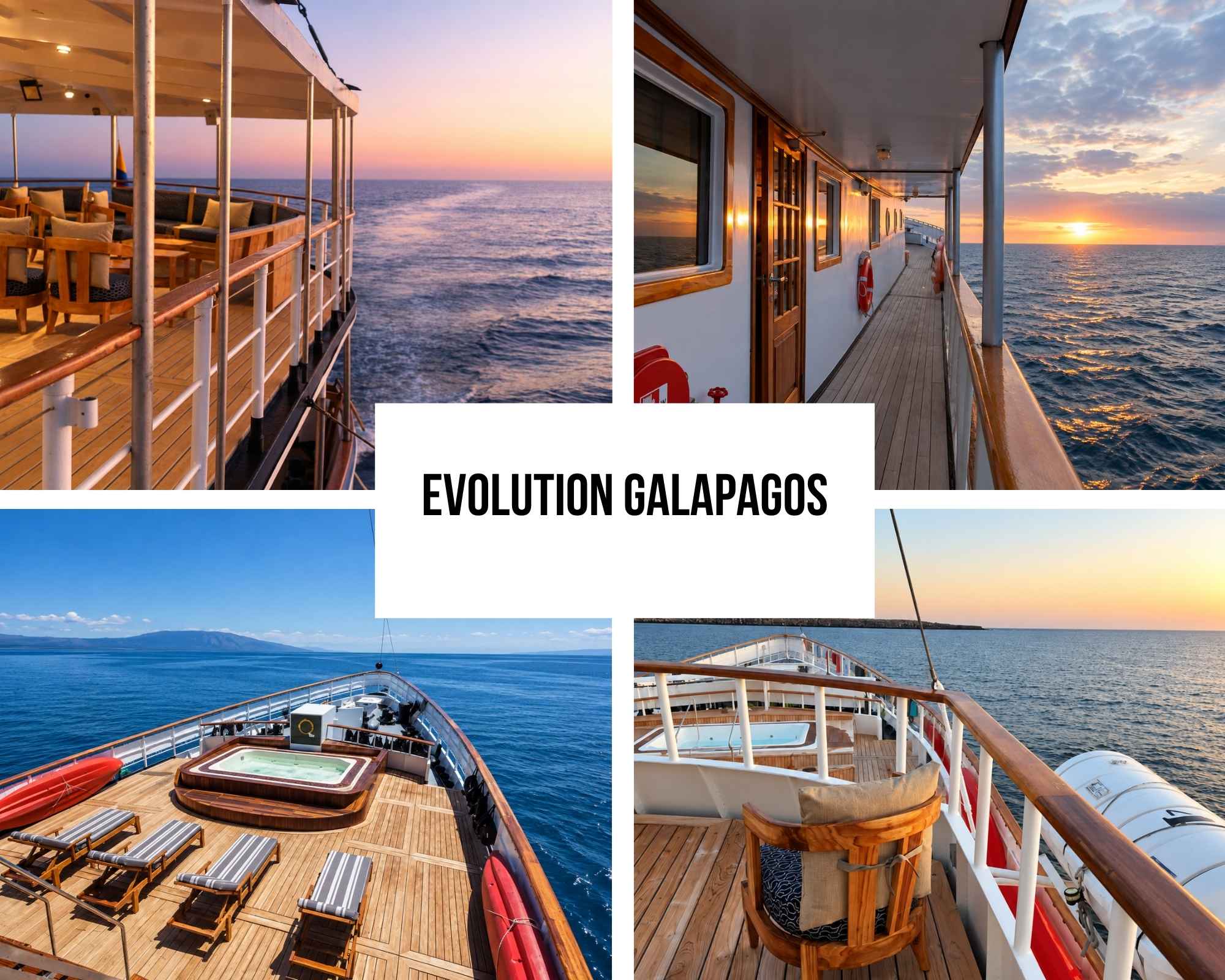
The Evolution’s independent review profile across TripAdvisor, Cruise Critic, and travel forums is strongly positive, with naturalist guides and crew service earning the most consistent specific praise. The honest notes: the vessel dates to 1979 (renovated 2017) and some reviewers notice the age in small details of fit and finish. One experienced Cruise Critic reviewer rated the food at 3 to 3.5 stars – decent, but below what some newer vessels offer. C1 and C9 anchor noise is a documented pattern across multiple independent accounts spanning different years.
Guides come up by name across reviews from different years and different departure groups. That’s not a fluke – it’s the consistent output of Quasar’s naturalist selection process, which prioritizes long island-specific experience over pure certification level. The average guide on the Evolution has more than 15 years of Galapagos guiding behind them. The difference between a guide who has watched the albatross colony at Española through two decades of breeding seasons and a guide reading from a training manual is not subtle when you’re standing there.
The 2017 renovation vintage is worth naming plainly. This is not a new-build. Travelers arriving from Ecoventura’s purpose-designed vessels may notice differences in the millwork, the corridors, the cabin finishes. It’s a well-maintained older vessel, not a sleek new expedition yacht. Whether that reads as “character” or “dated” is genuinely personal. Most reviewers accept it without complaint, but a few note it. Know before you book.
One pattern that doesn’t appear in most reviews: the Evolution sometimes runs below full capacity, particularly in shoulder season. Several independent accounts describe departures with 18-22 guests aboard. At that occupancy, the guide ratio drops to roughly 7:1 and the onboard social atmosphere shifts from “lively group” to something closer to a private expedition. The al-fresco bar at sunset with 20 people who’ve spent the day snorkeling together is a different experience than the same moment with 32. Shoulder season booking on the Evolution – May, June, September, October – is worth asking about if your dates are flexible.
Is the Evolution Worth Booking? Our Honest Verdict
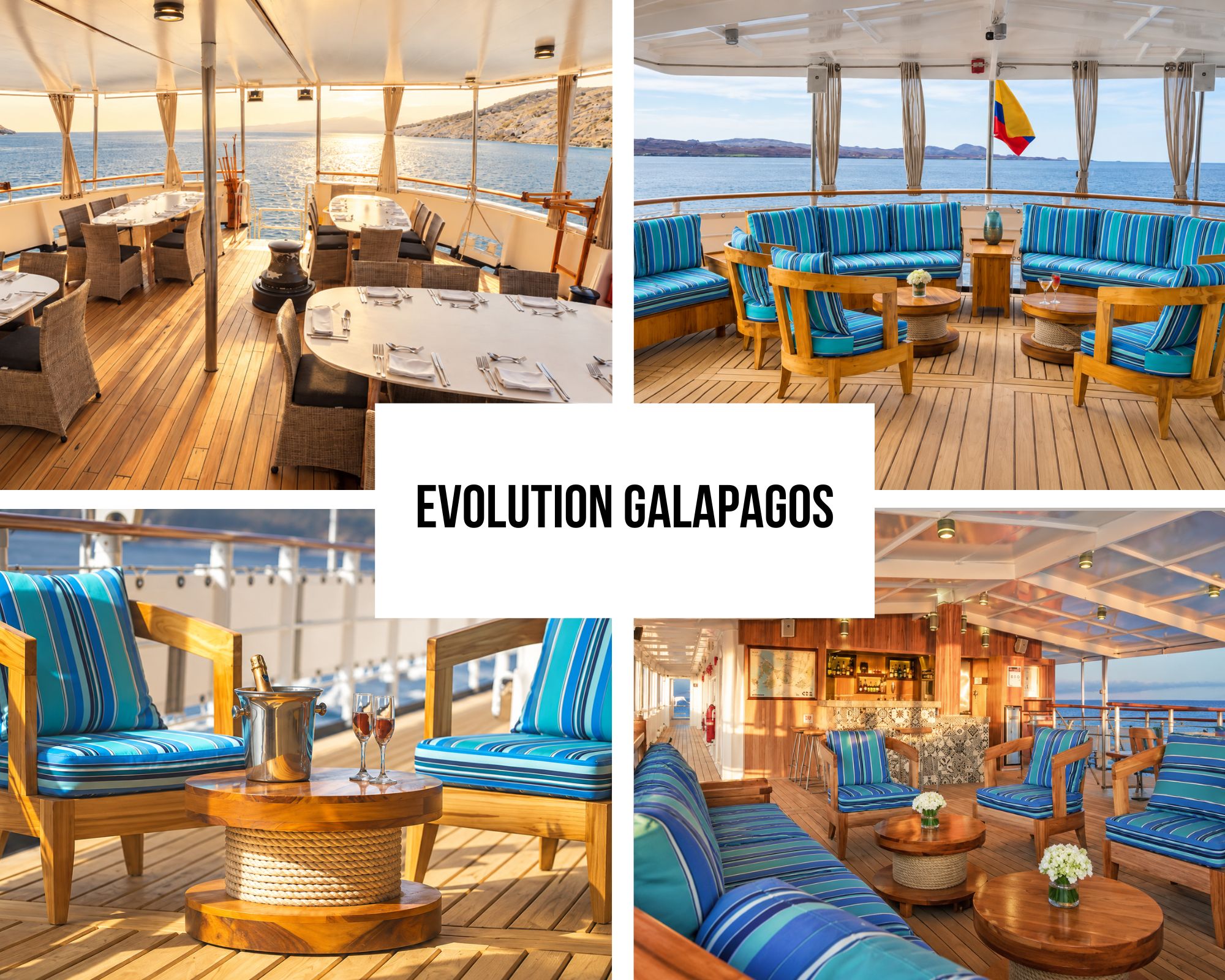
Yes, for travelers who have decided the Galapagos is a priority trip and want to do it properly, once. The Evolution is the most consistently awarded luxury Galapagos yacht of its generation, operated by the archipelago’s most experienced family-owned company. The onboard doctor, the 10:1 guide ratio, the full-group site access, the 15-day option, and the open bar all belong in the same package at this price. The caveats are real: request any cabin but C1 or C9, account for the 2017 renovation vintage, and understand this is an expedition first.
Nine consecutive Travel + Leisure World’s Best Awards don’t happen by accident. A boat earns that recognition once on a good year. Nine consecutive years is performance consistency across seasons, across changing guest demographics, across the natural variability of the islands themselves. The institutional knowledge that produces that record – the permit portfolio, the guide relationships, the 40-year operational history – is not reproducible by a newer operator regardless of hardware quality.
Book early for peak season: December, January, July, Easter week. Popular departures sell 12 to 18 months out. If your dates are flexible, shoulder season departures occasionally carry 30-40% last-minute discounts on near-term space – a genuine value at this tier. Ready to check availability and pricing for your target dates? Get in touch here for a free quote – no booking commitment, no pressure.
What Travelers Actually Report: Evolution Cruise Cohort Feedback
Based on feedback gathered through mytrip2ecuador.com, our YouTube audience, and conversations from the thousands of Galapagos cruise travelers Oleg has interviewed over more than a decade.
| Guide quality | 93% | 6% | 1% | Guides named by name across reviews spanning multiple years; 15+ years average experience; wildlife knowledge and group management both praised |
| Food and dining | 78% | 18% | 4% | Open bar strongly positive; meal quality rated 3-5 stars across independent accounts; afternoon appetizers specifically called out; dietary accommodations reliable |
| Crew and service | 91% | 7% | 2% | “Invisible” cabin service appears in multiple accounts; onboard doctor cited as meaningful safety advantage by families and older travelers |
| Cabin comfort | 74% | 19% | 7% | A-deck suites rated highest; C1/C9 anchor noise is documented pattern; 2017 renovation vintage noted in fit-and-finish comments |
| Itinerary coverage | 92% | 6% | 2% | Remote sites (Fernandina, Genovesa, Española) cited as highlights unavailable on other vessels; two excursions per day consistently delivered |
| Value for price | 81% | 14% | 5% | All-inclusive format perceived as strong value; doctor and guide ratio cited as justifying the premium; food quality relative to price the main mixed note |
What Catches People Off Guard on the Evolution
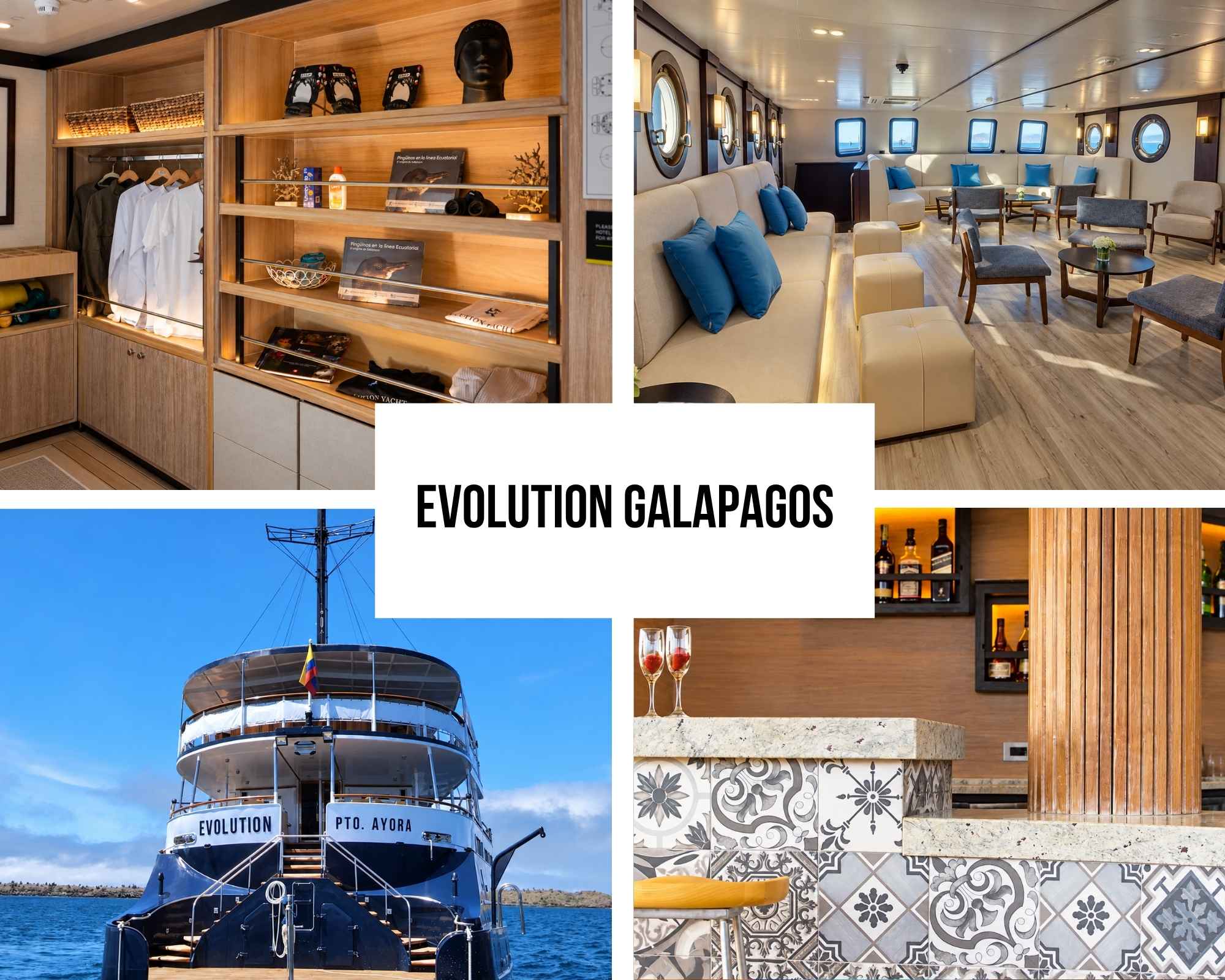
Cabins C1 and C9 are above the anchor chain. Multiple independent reviewers confirm the noise wakes light sleepers on overnight anchoring nights, and at least one white noise machine failed to cover it. Request any other cabin when booking. This is the Evolution tip we give every traveler, and it almost never appears in Quasar’s own pre-departure materials.
Days 1 and 8 are half-days. The first day involves flights, boarding, lunch, and usually one afternoon site visit. The last day is a morning half-site and departure before midday. An 8-day cruise delivers roughly 6.5 full expedition days. Standard across the Galapagos fleet, but travelers expecting 8 full-activity days should adjust expectations accordingly.
The open bar has a premium exception. Standard wines, local beers, and spirits are covered. Premium-label bottles are not – they run on your tab and are settled on departure day. Check the included-versus-premium list before arrival if you have specific wine preferences.
The Galapagos Transit Control Card ($20 USD per person) must be purchased through the official digital platform before flying to the islands, as of September 2026. The park entrance fee ($200 USD adults, $100 USD children under 12) is included in 2026 Evolution rates. Prices verified September 20, 2026.
Frequently Asked Questions
Which cabin should I avoid on the Evolution?
C1 and C9. They sit above the anchor chain, and the noise when the captain anchors overnight is documented across multiple independent reviews. Any other cabin on C-deck or D-deck is fine.
Is the Galapagos park entrance fee included?
Yes, for 2026. The $200 USD adult park fee and $20 USD Transit Control Card are both included in the published Evolution rates. Verify at time of booking as amounts are subject to change.
What’s the difference between the two 8-day itineraries?
“In the Steps of Pirates and Darwin” (Baltra) covers the western islands – Isabela, Fernandina, and Española. “Footsteps Back in Time” (San Cristobal) covers the central and northern islands including Genovesa. Neither is better. They’re geographically complementary. The 15-day Darwin’s Legacy combines both.
Is the Evolution good for families with children?
Yes. The onboard doctor is the headline advantage for parents. A 15% child discount applies on C-deck and D-deck cabins for June through December departures, for children 15 and under. The 10:1 guide ratio handles mixed-age groups well, and the outdoor deck spaces give children room to exist between excursions.
Considering the Evolution?
We can compare it against every other luxury Galapagos vessel – itinerary by itinerary, cabin category by cabin category – and give you an honest read on which one fits your specific travel dates and priorities. Cruises To Galapagos Islands holds a 4.9-star rating on both Google and TripAdvisor.
Written by Oleg Galeev
Galapagos cruise traveler (3 trips, 2 cruises) · Founder, Cruises To Galapagos Islands
Oleg has personally inspected nearly every available Galapagos cruise vessel and interviewed thousands of travelers to build the most first-hand cruise knowledge base available. He also runs the Ecuador travel blog mytrip2ecuador.com and the YouTube channel My Trip to Somewhere.
Cruises To Galapagos Islands is rated 4.9 stars on Google and TripAdvisor.
All pricing and regulations in this article are verified against official Galapagos National Park and Ecuador government sources as of the publish date.