
Best Camera Gear for a Galapagos Cruise
Quick Summary
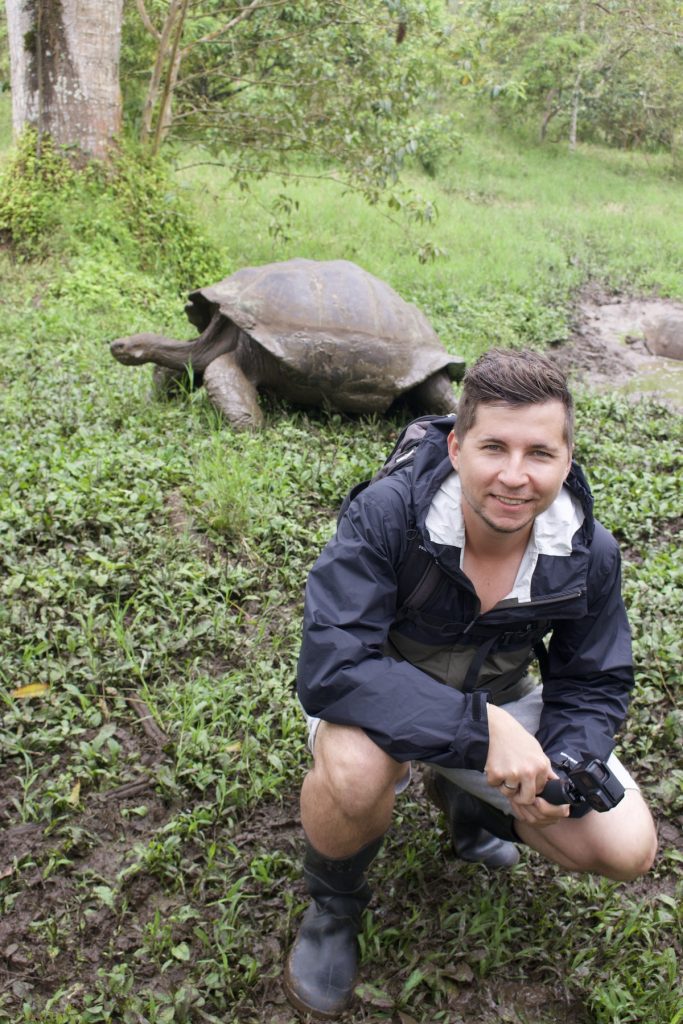
The Galapagos inverts every assumption about wildlife photography gear. You need less reach than you think (wildlife is at arm’s length), no tripod (trails are too narrow), and no flash (banned by park rules). The optimal land kit is a mirrorless body with a 24-105mm zoom as the primary lens and a 100-400mm telephoto as the second. Experienced photographers who have done the trip report that 75 to 90 percent of their shots come from the 100-400mm. Underwater, a GoPro handles snorkeling for most travelers; a mirrorless in a wide-angle housing raises the ceiling significantly. The three accessories that matter most are spare batteries, a large dry bag, and a lens cloth that never leaves your pocket.
Galapagos Camera Gear: Quick Reference
| Gear Category | Recommended | Priority |
|---|---|---|
| Camera body | Mirrorless with animal eye-detection AF (Sony a7 series, Nikon Z series, Canon R series, Fuji X series) | Essential |
| Primary lens (land) | 24-105mm or 24-70mm zoom. Handles 20 to 25 percent of shots: wide colony scenes, landscapes, environmental portraits. | Essential |
| Telephoto lens (land) | 100-400mm zoom. Handles 75 to 90 percent of shots across all wildlife contexts. Never comes off the camera at most sites. | Essential |
| Underwater (casual) | GoPro HERO13 or equivalent. Handles snorkeling video and stills for most travelers. | Strongly recommended |
| Underwater (serious) | Mirrorless in underwater housing with wide-angle dome port (16-28mm equivalent). Raises image quality ceiling significantly. | For dedicated underwater photographers |
| Spare batteries | Minimum 3 per body. Two full excursion days in sun drain a battery faster than most photographers expect. | Essential |
| Memory cards | More than you think you need. Day one consistently consumes more than expected. Bring a buffer of at least 2x your estimated daily usage. | Essential |
| Dry bag | 20 to 30L for the camera bag during panga transfers and wet landings. Not optional. | Essential |
| Flash | Leave it at home. Flash photography is prohibited at all Galapagos National Park visitor sites. | Do not bring |
Flash prohibition verified against GNPD rules, September 1, 2026.
What Makes the Galapagos Different for Camera Gear Selection?
The Galapagos requires a complete rethink of wildlife photography gear assumptions. At most destinations, the challenge is getting close enough to wildlife to fill the frame. In the Galapagos, the challenge is often the opposite: animals walk up to you, sit on the trail directly in front of your lens, and approach from distances where a 500mm prime would be unusable. The optimal kit is shorter, lighter, and more versatile than the typical wildlife photography setup, and it changes significantly from land to water.
The proximity issue is the one that surprises experienced wildlife photographers most. A blue-footed booby performing its courtship dance one meter from your feet is below the minimum focus distance of a 500mm prime lens. A sea lion that swims directly into your underwater housing port cannot be captured on a 100mm macro. The Galapagos is a destination where the animals set the shooting distance, not the photographer, and the gear that works is the gear flexible enough to work at every point along that range.
The second Galapagos-specific factor is the environment itself. You are shooting in salt air, on or near water, from a moving panga, on rough lava surfaces in full equatorial sun with high UV exposure. Condensation is a real issue when you move between the air-conditioned vessel and the hot, humid shoreline. Salt spray from pangas deposits on glass and metal surfaces within minutes of exposure. Every gear decision needs to account for environmental conditions that most temperate-climate photographers rarely encounter.
The third factor is the park rules. Flash photography is banned at all visitor sites. Drones are prohibited entirely. These are not edge cases to plan around: they are the baseline operating conditions for every excursion on every day of the cruise. Any flash-dependent photography plan fails before it starts. Any drone-based aerial photography plan is illegal. The gear you bring must work within those constraints.
Photography-focused travelers often ask us which vessels and itineraries give the best access to the subjects they want to shoot. The answer varies significantly by season and route. If you are planning a Galapagos cruise around specific photographic subjects or behavioral windows, we can help you match the timing and itinerary to what you want to photograph. Fill out this short form and we will build the right itinerary recommendation around your photographic goals.
What Camera Body Should You Bring on a Galapagos Cruise?
The current generation of mirrorless cameras with animal eye-detection autofocus is the right platform for a Galapagos cruise. The animal tracking systems on Sony a7 and a9 series, Nikon Z series, Canon R series, and Fujifilm X-H and X-T series bodies lock onto bird and reptile eyes at close range with a consistency that older phase-detection DSLR systems cannot match. Crop-sensor bodies have a useful reach advantage with the 100-400mm lens. Full-frame bodies handle low-light dawn and dusk excursions better.
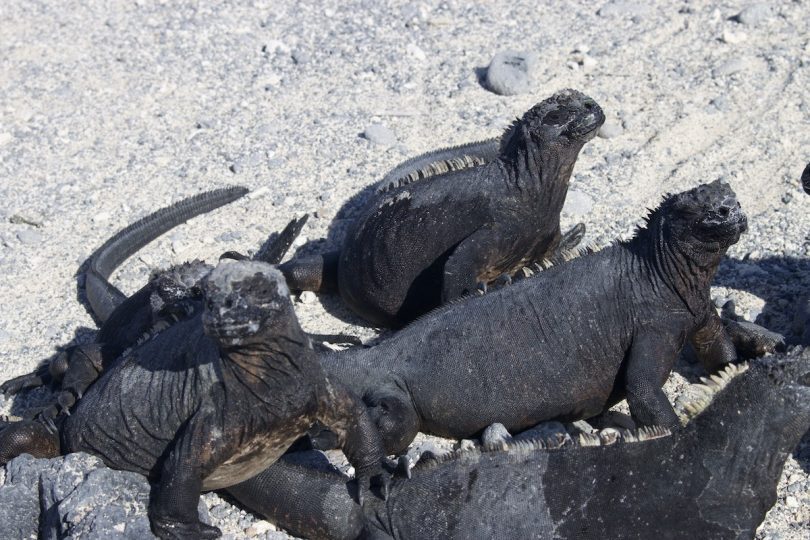
Animal eye-detection autofocus is not a luxury feature in the Galapagos. It is the feature that captures the booby’s eye during the courtship dance instead of its foot, the marine iguana’s face instead of the rock behind it, and the waved albatross’s bill during a display instead of the white of its neck. When an animal is stationary and well-lit and fills the frame, any modern autofocus system produces a keeper. When the animal is moving, partially obscured by another animal, or slightly backlit on a bright beach, the tracking system is what separates a sharp frame from a soft one.
Two bodies is the practical setup for serious photographers. One body carries the 100-400mm telephoto and stays around your neck or in a holster the entire excursion. The second body carries the 24-105mm zoom and lives in your daypack or camera bag for the moments when the 400mm end is too long. Switching lenses in the field on lava-cobble terrain in salt air creates risk of sensor contamination and physical damage. Having two bodies eliminates lens changes entirely.
Battery life is the variable that punishes photographers who underestimate it. A full day of two excursions in bright sunlight with frequent AF bursts and live-view shooting drains a mirrorless battery faster than any benchmark figure suggests. Three batteries minimum per body, charged simultaneously each evening on the vessel. Some cruise cabins have limited outlets: bring a small multi-socket charger and confirm outlet compatibility for Ecuador (120V, Type A/B plugs) before departure.
Which Lenses Work Best in the Galapagos?
The 100-400mm zoom is the single most important lens for a Galapagos cruise. Experienced photographers who have made the trip report that 75 to 90 percent of their shots come from this focal range. The 24-105mm handles the remainder: wide colony scenes, volcanic landscapes, and close-quarter shots where the 100mm end is already too long. Nothing longer than 400mm is necessary in most situations, and most prime lenses over 300mm create minimum focus distance problems when wildlife approaches close.
The 100-400mm dominance is well-documented across multiple photographers who have returned with detailed shot analysis from the trip. One photographer who shared focal length EXIF data from a 10-day Galapagos cruise found that the 100-400mm accounted for more than 90 percent of his keepers, and that within that range, 300mm to 400mm was the most-used portion. This matches the practical reality: you are close enough to wildlife that the 100mm end fills a booby’s face, and you frequently need 400mm for birds in flight, wildlife on the far side of a colony, or penguins in the water from a panga.
The 70-200mm f/2.8 is an alternative for photographers who already own one and do not want to invest in a 100-400mm. It performs very well in the Galapagos for its intended range. The f/2.8 maximum aperture is genuinely useful in the lower light of early morning landings and on overcast days. The limitation is that 200mm is not always enough reach for birds in flight, distant colony animals, and marine wildlife from the panga. Photographers who bring a 70-200mm consistently report wishing they had the extra reach on specific shots.
A wide-angle lens (16-35mm equivalent) is useful but not essential. Volcanic landscape shots, wide views across a colony, and environmental portraits that show the dramatic black lava setting around a wildlife subject all benefit from wide coverage. If luggage weight is a constraint, the 24mm end of the 24-105mm covers most of these needs adequately. A dedicated ultra-wide adds maybe 10 percent of shots on a typical itinerary at the cost of another lens in the bag.
Certain itinerary routes give you meaningfully more time at specific photographic sites: Española for albatross (April through November), North Seymour for frigate birds, Bartolome for the iconic Pinnacle Rock volcanic landscape. If your lens and body selection is oriented toward specific subjects or light conditions, we can match that to the right departure window and route. Reach out here and we will help you build an itinerary around what you most want to photograph.
What Underwater Camera Gear Do You Need for Galapagos Snorkeling?
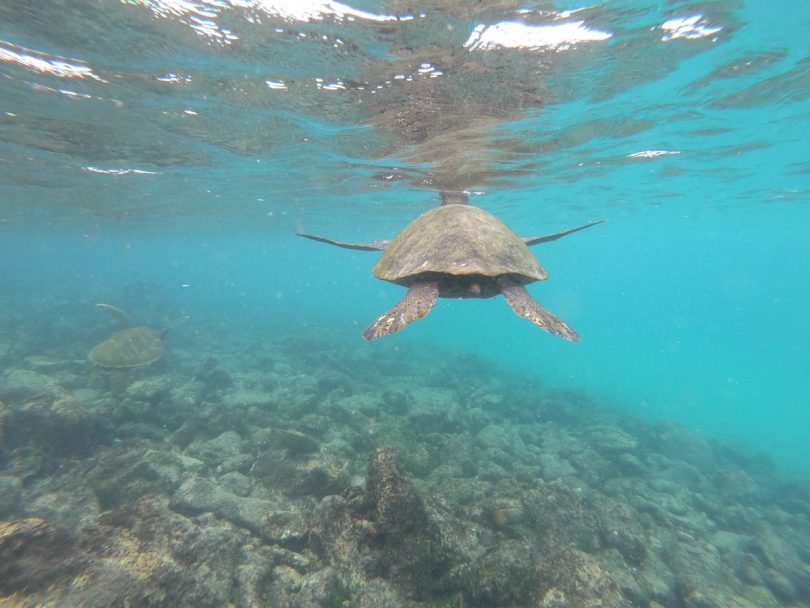
A GoPro HERO13 or equivalent is the right underwater camera for most Galapagos cruise snorkelers. It is small, waterproof to 10 meters without a housing, handles the wide-angle encounters that define Galapagos snorkeling (sea lions at arm’s length, sea turtles surfacing overhead, penguins darting past), and requires no setup or experience to use effectively. For photographers who want higher image quality and more control, a mirrorless body in a dome-port underwater housing produces significantly better results but adds considerable cost, weight, and complexity.
The GoPro case is straightforward: in the Galapagos, underwater encounters happen fast and close. A sea lion will be next to you before you have composed a shot on a larger system. The GoPro’s ultra-wide angle captures everything in the frame regardless of whether you aimed precisely. Its size means it does not interfere with snorkeling. And in the clear, shallow water at most Galapagos snorkeling sites, the image quality from current GoPro models is genuinely excellent in good light. Video is the medium where it excels most: burst-mode stills from video capture the sea lion spiral or the penguin dive that is impossible to time on a still-photo shutter.
For photographers who want to do more than document the experience, a mirrorless camera in a properly fitted dome-port housing raises the ceiling significantly. The dome port corrects the refraction distortion that flat-port housings create at wide angles, which matters when your primary subject (a sea lion, a sea turtle) is within a meter of the lens. A Sony a7 series or Nikon Z body in a compatible housing with a 16-28mm equivalent lens covers the full range of Galapagos snorkeling encounters: close-wide shots of sea lions and turtles, schooling fish from above, the surface-refraction effects that make for the most striking underwater images.
The OM System TG-7 (formerly Olympus) is a strong middle option: a compact camera that is waterproof to 15 meters without any housing, shoots RAW files, and has a macro mode that works underwater. It does not match a mirrorless system for image quality, but it significantly outperforms a GoPro for still image detail and color rendition in the ambient-light conditions of Galapagos snorkeling. Travelers who want to carry one small waterproof camera rather than a full system often choose this route.
What Accessories Should You Pack for Galapagos Photography?
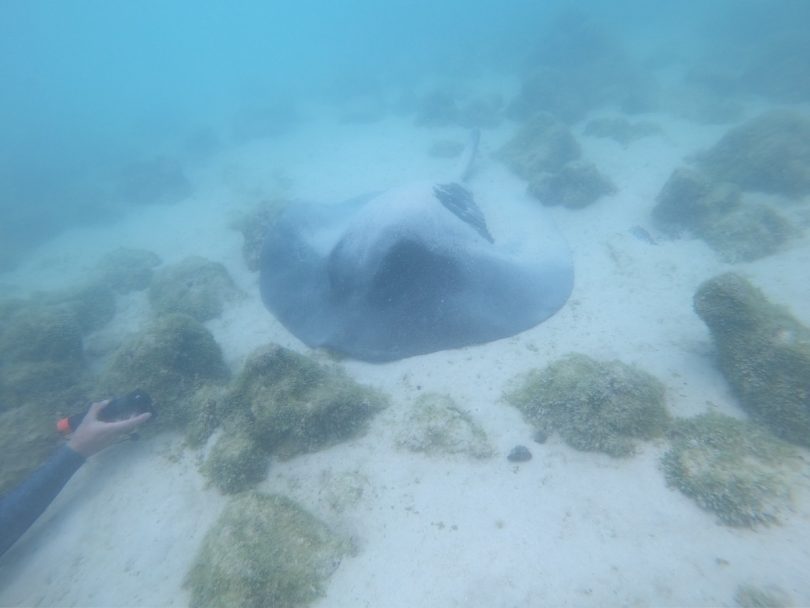
The accessories that make the most practical difference on a Galapagos cruise are a large dry bag for panga transfers, spare batteries, high-capacity memory cards, a lens cloth kept accessible at all times, a peak design wrist strap or camera clip for fast access, and a compact portable hard drive or high-capacity tablet for evening image backup. Binoculars are useful but not a camera accessory. A tripod is optional and mostly inadvisable on narrow lava trails.
The dry bag is the protection layer that cameras on Galapagos pangas require. Camera bags stored in the bow during panga crossings are not protected from salt spray by any amount of weatherproofing on the bag itself. A dedicated dry bag that your camera bag slides into, rolled closed and clipped, keeps your entire kit dry through the roughest transfer. The transition protocol that most photographers develop by day two: dry bag sealed for the crossing, open and accessible on arrival at the site, sealed again for the return transfer. This takes about 90 seconds and eliminates the most common source of equipment damage on Galapagos cruises.
A lens cloth kept in a shirt pocket, not the camera bag, is the second most-used accessory after the camera itself. Salt spray from panga crossings deposits a film on lens elements that degrades image sharpness within minutes. The spray is often invisible until you look at images from a panga shooting session and see the diffusion. Wiping the front element before every shooting session is the practical solution. A microfiber cloth in the pocket means this happens reflexively rather than requiring you to dig through the bag.
Evening image backup is a workflow consideration that photographers miss until they lose images. A 256GB memory card fills faster than most travelers expect: burst shooting on a 40-megapixel body at a frigate bird colony can consume 10GB in a single session. Bring either a compact portable SSD for nightly transfers, or a tablet with a high-capacity drive and a card reader. Some luxury vessels provide imaging computers in common areas for exactly this purpose; confirm before you travel.
If you are traveling on a photography-focused itinerary and want to know which vessels offer dedicated imaging facilities, camera rinse stations, and naturalist guides who actively position groups for photography, we can tell you which ones meet that standard. The Lindblad fleet is the most consistently cited for photography support, but other vessels do specific things well depending on the itinerary. Send us a message here and we will match your photography priorities to the right vessel and departure window.
Packing for a Galapagos cruise has a few non-obvious requirements that catch first-timers off guard. Here’s a guide on what to pack for a Galapagos cruise so you show up with everything you need and nothing you don’t.
What Camera Gear Should You Leave Behind?
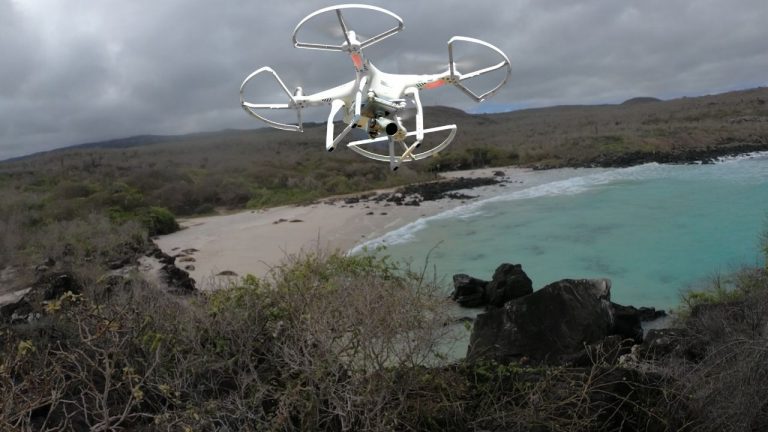
Leave behind: all flash equipment (prohibited by GNPD), drones (prohibited entirely), any prime lens longer than 500mm (minimum focus distance problems), a full-size tripod (impractical on narrow lava trails), a GoPro chest mount (creates a dangerous protrusion near wildlife at close range), and any gear you have not used before and will not have time to learn. The Galapagos is not the place to figure out new equipment.
Flash equipment fails at the park rule level, not just the practical level. External speedlights, ring flashes, and macro flash systems are all caught by the GNPD prohibition on flash photography at visitor sites. Even if you planned to use them only for non-wildlife shots (landscapes, underwater in non-park areas), the weight and space they occupy displaces gear that serves the trip’s primary photographic purpose. Leave flash entirely at home and commit to natural light throughout.
The full-size tripod question comes up regularly and the answer for most photographers is to leave it. Galapagos trails are single-file lava-cobble paths that do not accommodate a tripod setup without stopping the entire group. The wildlife proximity that makes the Galapagos extraordinary also makes tripods largely redundant for the shots that matter: a 100-400mm at 1/500s in bright equatorial sun does not need tripod stabilization. A compact tabletop tripod serves the edge cases (long-exposure black lava landscape at blue hour, stationary wildlife in low light at the end of an excursion) without the weight and trail-blocking problem of a full-size three-legged system.
The “new gear for the trip” mistake is the one that costs photographers the most on day one. The Galapagos delivers extraordinary wildlife access from the first panga ride. A photographer who bought a new mirrorless body six days before departure and is still navigating the menus on the trail is missing shots that a photographer with any familiar camera would capture reflexively. If you are upgrading for the trip, buy the new equipment at least two months out and shoot with it regularly before you travel.
We’ve got a full breakdown on what not to bring on a Galapagos cruise if you want to know exactly which items to cut from your bag before you board and why they’ll cause more problems than they solve.
How Do You Protect Your Camera Gear on a Galapagos Cruise?
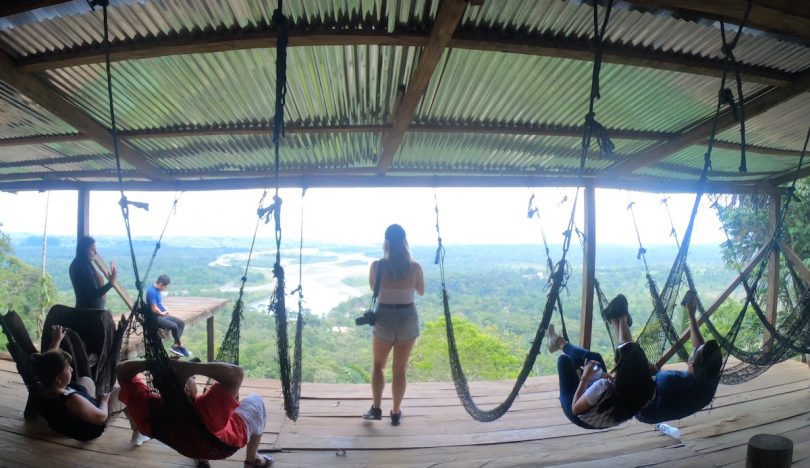
Camera gear on a Galapagos cruise faces three specific threats: salt spray from pangas, humidity and condensation when moving between the air-conditioned vessel and humid shore environments, and impact from lava-cobble terrain. The solutions are a large dry bag for transfers, a silica gel desiccant pack in the camera bag for humidity management, and a padded holster or body-mounted clip for carrying the camera on the trail rather than swinging it on a strap over lava.
Salt spray is the most consistent threat. Salt deposits on optical elements create diffusion. Salt deposits on metal contacts cause corrosion over time. Salt that gets into lens focus rings and zoom rings creates grinding friction that worsens with each subsequent deposit. After every panga crossing where the camera was exposed to spray, wipe all glass with a clean microfiber cloth and wipe exposed metal surfaces with a slightly damp cloth before drying. At the end of each day, open the camera bag, remove lenses, and let all surfaces air in the vessel’s interior away from direct salt air.
Condensation happens when you carry a cold camera from an air-conditioned cabin into 30°C humid shore air. The glass elements fog from the inside in a way that no amount of wiping from the outside addresses. The practical solution is to move the camera bag from the cabin to the vessel’s common area 15 to 20 minutes before departure, letting the equipment acclimate to ambient temperature before the excursion. This is a small procedural change that prevents a frustrating problem on high-value shooting opportunities.
On the trail, a camera strap that swings the body freely against your chest while you navigate uneven lava creates risk of the body striking rock. A Peak Design Capture clip on your daypack strap holds the camera body flat against your chest with the lens pointing forward, accessible with one hand in under two seconds, and does not swing freely. It is the most practical carry system for Galapagos trail conditions and the one recommended most consistently by professional photographers who lead workshops in the archipelago.
What Photography-Focused Travelers Say About Gear Choices (Our Data)
From feedback collected through mytrip2ecuador.com and our YouTube audience, here is what photographers most consistently said about their camera gear decisions after returning from a Galapagos cruise:
| Observation | % Who Named It | Pattern Observed |
|---|---|---|
| Used 100-400mm for 75%+ of shots | 81% | Photographers who brought the telephoto zoom reported it as the most-used piece of gear on every day of the cruise, regardless of whether they also brought a prime or a wide lens. |
| Ran out of battery before expected | 54% | More than half of photographers reported depleting their first battery earlier than expected on day one. Travelers who brought fewer than 3 spare batteries reported rationing shots on later excursions. |
| Regretted not bringing underwater housing | 43% | Photographers who used only a GoPro underwater consistently cited the snorkeling sessions as the ones where they wished for better image quality. Those with a mirrorless housing described the snorkeling as the highest-quality shooting of the entire trip. |
| Salt spray damaged images from panga sessions | 31% | Almost a third of photographers reported discovering salt spray diffusion on panga-session images during evening review. Most who established a post-crossing lens-wipe routine eliminated the problem by day two. |
| New gear created missed shots | 28% | Travelers who brought new or unfamiliar equipment reported missing shots on day one due to menu navigation or unfamiliar controls. Those who had used their equipment for months before departure had no such losses. |
Frequently Asked Questions
Do I need an expensive camera to photograph wildlife in the Galapagos?
No. Because the animals approach so closely, a smartphone produces extraordinary images in the Galapagos. A mirrorless or DSLR with a 24-105mm zoom handles the vast majority of situations well. The quality of your images depends far more on timing, patience, and guide positioning than on equipment cost. Where equipment matters is specifically in the 100-400mm telephoto range for birds in flight and distant animals, and in underwater photography where a GoPro and a mirrorless housing produce meaningfully different results.
What is the best lens for a Galapagos cruise?
The 100-400mm zoom, by a significant margin. Experienced photographers who have done the trip with detailed shot analysis report that 75 to 90 percent of their keepers come from this focal range. It handles close wildlife, birds in flight, panga-side marine life, and distant colony subjects. Pair it with a 24-105mm for landscapes and close-quarter shots and you have the complete two-lens kit for a Galapagos cruise.
Can I use flash on a Galapagos cruise?
No. Flash photography is prohibited at all Galapagos National Park visitor sites. This applies to all flash equipment: built-in pop-up flash, external speedlights, ring flashes, and video lights directed at wildlife. Disable automatic flash before every excursion. Use higher ISO settings in low light instead. Modern mirrorless cameras produce excellent results at ISO 3200 to 6400 in early morning conditions.
Is a GoPro enough for snorkeling in the Galapagos?
For most travelers, yes. The GoPro handles the wide-angle, close-range encounters that define Galapagos snorkeling: sea lions at arm’s reach, sea turtles surfacing, penguins in the water. Its video capability is where it excels, capturing the sea lion spiral or the turtle ascent in a way that still-image shooting cannot always time. Photographers who want higher image quality and more control in still photography will benefit from a mirrorless in a dome-port housing, but the GoPro covers the experience well for most cruise travelers.
Do I need a tripod for photography on a Galapagos cruise?
In most cases, no. Galapagos trails are single-file lava-cobble paths that do not accommodate a full-size tripod setup without blocking the group. Wildlife proximity and bright equatorial light mean most shots work at hand-holdable shutter speeds with a telephoto zoom. A compact tabletop tripod handles the edge cases. Leave the full-size tripod at home and use the weight allowance for an extra battery and memory cards instead.
Planning a Photography-Focused Galapagos Cruise?
The vessel and the itinerary determine which photographic subjects you access and during which behavioral windows. The Lindblad fleet carries a certified National Geographic photo instructor on every voyage. Specific western routes give you the volcanic landscape of Bartolome and the albatross of Española. We work with photography-focused travelers regularly and can match your gear setup, target subjects, and travel dates to the right cruise. Cruises To Galapagos Islands is rated 4.9 stars on Google and TripAdvisor. Every conversation is free with no commitment. Fill out the contact form and we will build the right photographic itinerary for your trip.
Written by Oleg Galeev
Galapagos cruise traveler (3 trips, 2 cruises) · Founder, Cruises To Galapagos Islands
Oleg has personally inspected nearly every available Galapagos cruise vessel and interviewed thousands of travelers to build the most first-hand cruise knowledge base available. He also runs the Ecuador travel blog mytrip2ecuador.com and the YouTube channel My Trip to Somewhere.
Cruises To Galapagos Islands is rated 4.9 stars on Google and TripAdvisor.
All park rules cited in this article are verified against official Galapagos National Park and Ecuador government sources as of the publish date.